Phase Four: Intelligent Disobedience

Formal Harness Training
The dogs now have full freedom to make decisions and some mistakes with normal guidework responses. When errors occur, instructors continue to show the dog the correct answer before confusion sets in. Instructors still pattern challenging and advanced guiding decisions and responses.
Dogs are worked past open parking lot areas and difficult travel lines to further establish responsible line stability.
Working past challenging animal and food distractions
continues.
Instructors often “spot” each other (for safety), and practice short blindfold sessions with their respective dogs. This gives them information regarding what guidework behaviors are strong and weak in an individual dog. Practice routes that follow these blindfold sessions focus on development of needed areas and reinforcement of established responses.
NEW! After preliminary testing, more extensive work inside buildings begins.
Notable Accomplishment – Traffic Conditioning (Exposure)
Dogs are introduced to traffic safety problems and shown how to respond to them via leash cues. Dogs learn to “stop”, “hold line” when stopped, and “back up on their line” when a vehicle gets too close. They are also introduced to increasing their pace for any vehicle that approaches too close to the rear of the team.
Body Handling Acceptance
Continues as in Phase 3. NEW! New handlers are added to assess the dog’s comfort and willingness with strangers.
Physical Agility Programs
Continues as in Phase 3.
Obstacle Course Progression – Intelligent Disobedience Training Begins
All dogs guide in harness through a challenging obstacle clearance course with leash cues as necessary to move as a finished guide. Course design becomes increasingly more difficult, requiring problem solving skills.
NEW! Some clearances now require a stop. Intelligent disobedience responses are introduced after successful preliminary testing. Intelligent disobedience is when a Guide Dog purposely does not respond to a handler’s guidework verbal cue because it is either unsafe or impossible to follow through with the response.
NEW! Addressing errors is now introduced for basic clearance work. Dogs are given an opportunity to re-do the area (“re-work”) after being shown the error.
NEW! An overhead clearance is any obstacle that is above the dog’s head. Dogs are initially taught to target this type of clearance. The dogs are then taught to look up for overhead clearances through a graduated approach (teaching bar starts low, and is gradually raised as dog gains proficiency).
Socialization
Extra socialization assignments are done with individual dogs as needed. Some examples: harness or surface sensitive dogs; dogs that are reluctant to relieve on leash; or dogs that have questionable kennel behavior that needs “proofing” or further development in a “house” (office or dorm) setting (dogs that vocalize on tie down or crate, chewing propensities, etc.).
CWTs focus on additional relaxation sessions for all dogs as training progresses. These sessions could include one or several of the following activities: community run time, kennel enrichment programs, grooming, individual play sessions, office time at staff desks, and relaxing campus walks.
(from Guide Dogs for the Blind Phase Descriptions)

A Few Things

I hope everyone is getting ready to enjoy the 4th of July. I’ve just decided to take the next few days off from posting on my blog, but I’ll update a few things first.

We are puppy sitting again. This time it is a 12 week old yellow lab named Redding. He is very light colored with a dark nose and cute as can be. He is doing well. We have him until the 14th when his family gets back from vacation. Dune is enjoying having a play mate.

I finally got Zodiac’s official portrait picked up. I’ll have to take a new photo of our wall and post it here.

I just ordered a proof copy of “My Grandma Mary” from Lightening Source. It should come pretty quick if I created the pdf files properly. It has been a steep learning curve switching from Blurb to LSI. Learning new stuff is good for me but not always comfortable. But to make “My Grandma Mary” available for more than my immediate family we needed to make this move.

Have a good holiday weekend and I’ll be back on track on Monday.

Girls Camp – The Lord’s Amazing Air-corps

Girls Camp Logo

I’m in the midst of planning a prepare for the girls camp that our church does for 12 to 18-year-old girls every summer. So I thought I’d share some of what I’ve put together for that. Our main goal is for the girls to realize how amazing they are and how much they are loved. The theme we picked is “The Lord’s Amazing Air-corps.” We are making a flag, bandanas, and Berets. We also found some alligator looking cell phone cases at a local thrift store for $.25 each so we are using those to little thoughts and notes about how the girls are amazing. For the 6 weeks leading up to camp we are doing a newsletter to “train” the girls before the report to “Camp Brighton” for their last training to become part of the “Lord’s Amazing Air-corps” along with two or three midweek emails on things to think about.

One of the things I’m really excited to see how it goes is the stories. We have asked all the girls and their leaders to come to camp prepared to share a story from their own lives or their family. We are hoping to put this together in a little book so all the girls will have a copy of the stories they heard. It will be interesting to see what kind of stories they pick and how the girls respond to each others stories.

We have our final big preparation activity before camp on Tuesday night. I’ll see if I can get some photos and post them here. Here are the cards for the cell phone cases I have designed for camp. After cutting them out, I punched a hole in the corner and put them together on one of those loose leaf binding rings. The blank ones will be used at camp to share with the girls ways that they are amazing. I still have more to design for the next three weeks of “training” before camp. Feel free to use them for any non-commercial use if you find them helpful.

cards for cell phone cases

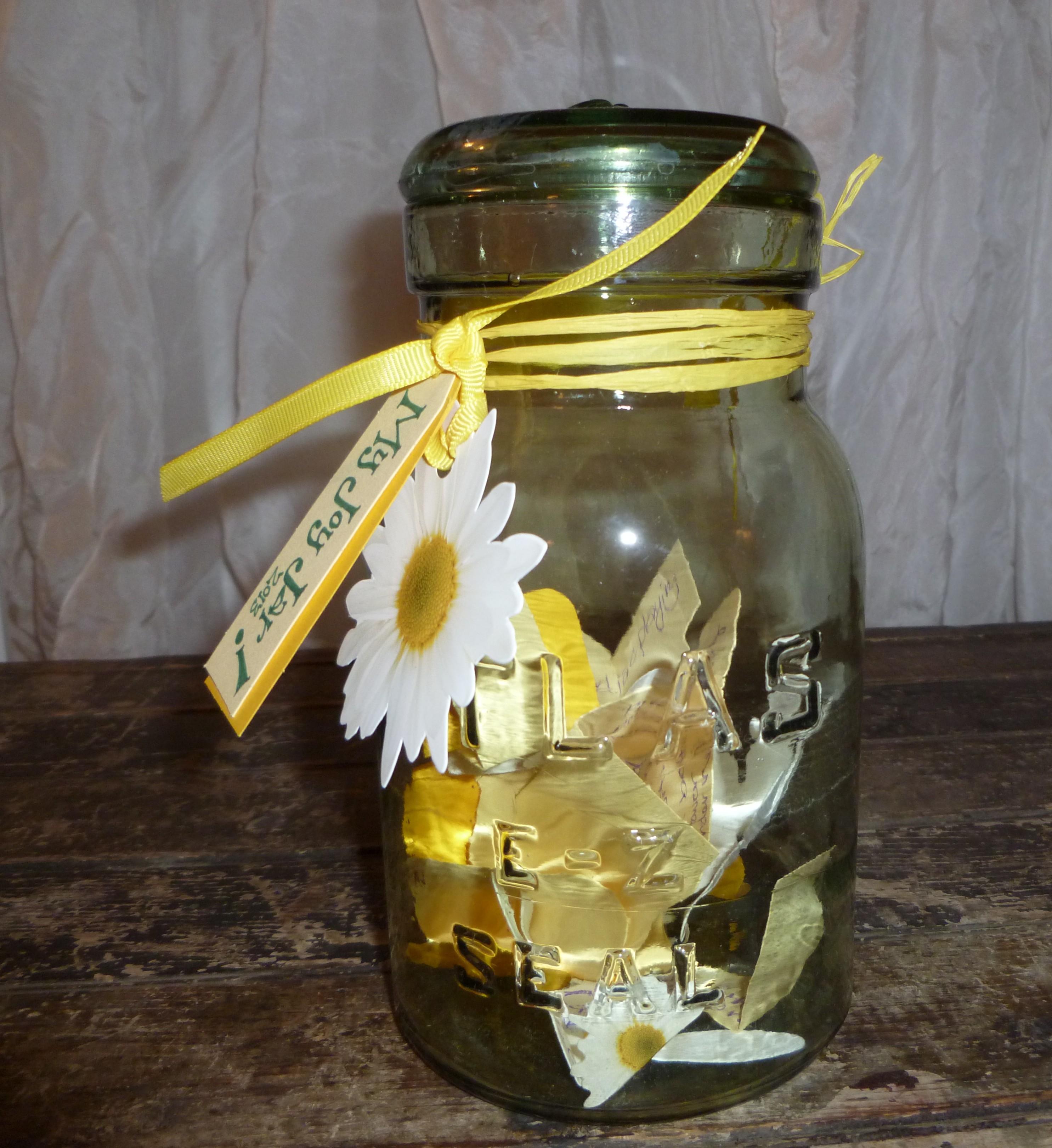
Joy Jar

P1040284

  • learning
  • Jordan River Parkway Trail
  • getting girl’s camp planned
  • wild flowers
  • my “wall”
  • the power of music
  • feeding mom and dad
  • yummy food
  • finding the names of Dune’s littermates
  • puppies at play
  • air conditioning
  • ice cream
  • an understanding husband
  • Sunday
  • electricity!
  • Dune comforting Volt
  • my computer
  • $2 per yard fabric
  • air conditioning

Thoughts on Dog Leashes

Nairobi

Earlier this week I was discussing dog leashes with a friend. When we had a pet dog we always used a basic nylon leash or a retractable. After raising puppies for Guide Dogs for the Blind for several years I’ve become spoiled by good leather leashes. I still love retractables and we use simple nylon leashes around the house but for anything else there is nothing like a good leather leash. When we got Apex we received this cool leash with two clips and an extra ring so the leash can be long or short. If you’ve never tried one of these I highly recommend them. A fellow puppy raiser has started making them, so if you are interested go to her website. The type we use with the puppies is the versatile dog leash.

Pupdate – Dune

Dune

I haven’t posted about Dune in a long time. She is doing great and started to look like a grown-up. She is entering those teen years and developing a few little rebellious behaviors but nothing too bad. I finally found out all the names of her littermates yesterday when the GDB littermate book came out. Here is what I now have on the Bosworth/Cava litter born 11/11/2012:

  • Deanli – male
  • Disco – female
  • Dixie – female
  • Drexel – male
  • Dune – female
  • Durham – male
  • PADS Penny II – female

They are all yellow. You probably notice that one names stands out. Penny was donated to Pacific Assistance Dogs Society in British Columbia, so they named her. A number of young puppies were donated to PADS at the same time as Dune’s sister Penny. I found this cute video and there is a good chance one of these yellow labs in Dune’s sister Penny.

It is a regular practice of many of the service dog schools around the world to exchange puppies or breeders to help everyone have better genetic diversity. You may not remember but Yakira’s dad (Pike) on loan to GDB for six months from Austrailia and her mother was the result of a female donated to a school in Holland and then one of her offspring was sent back to GDB. Casey’s (Dune’s aunt) dad (Jay) was donated to GDB by an organization in Korea. I find the pups pedigrees very interesting.

I’ve neglected getting photos taken of Dune. I’m ashamed to say that I haven’t taken any pictures since Zodiac left more than a month ago. Time to make it a priority and stop putting it off.

Pupdate – Zodiac

Zodiac has always been attracted to sounds and somewhere along the way he learned that the doorbell usually meant something interesting was about to happen. When Zodiac hears the ding-dong, he gets all excited, barks a couple of times and runs to the door.  I then ask him to step back from the door and wait calmly for me to answer it. With maturing he has made progress and the last few days he has done much better than average. Hopefully he is out growing this behavior.

Zodiac is still in phase 1 this week. I can’t help but be a little disappointed. There are three reason I can think of why he is still in phase 1:

  • he is have trouble with something in the training
  • he is sick
  • his trainer didn’t update his status

Next week’s report will probably give us some clues. There were two other dogs who stayed in phase 1, which might help the theory that the trainer didn’t update their status. I’d love Zodiac to be a guide dog but even more than that I want him to have a happy life. If being a guide dog will make him happy, I all for that. If he wouldn’t be happy being a guide dog, I’d like him to find another career.


Joy Jar

P1040284

  • double dog walk
  • time with family
  • yummy sweet treats
  • making progress on publishing “My Grandma Mary”
  • chatting with friends
  • helping Mom and Dad
  • ColorNote app
  • good dinner
  • spending time with Kim and Noreen
  • swooping swallows
  • pleasant breezes
  • red-winged black birds
  • lime yogurt
  • Dune doing good in her kennel
  • sound of birds under the overpass
  • Dune and Clifford playing
  • Zodiac in phase 1
  • lemonade
  • happy dog
  • visiting Virginia
  • getting my shelves cleaned up
  • phase 1

Pupdate – Zodiac

Zodiac is very zealous about life and sometimes it comes across as stubbornness. I’ll never forget our first day together. He was exploring his new house and decided he wanted to go into the spare bedroom. This is our cat’s territory and off-limits to the dogs, so I picked up his puppy leash and stopped him. He didn’t like that and pulled harder to go into the room. I think we spent 10 minutes with Zodiac trying to go forward into the room and me preventing him. To his credit he learned his lesson and we never had that battle again.

Zodiac is finally in phase one! It seems like it has taken him forever to get there. He has been gone a month now so it has been awhile. But he is finally moving. If you want to know more about what he is learning go to this post on phase one. I finally got around to ordering Zodiac’s official portrait for our wall today. I’m excited to add his happy face to the other five pups that are already up there.

Phase One: Formal Training Begins

Food Reward and Clicker Techniques

Food rewards are used in the GDB training program as a powerful motivation and reinforcement tool for learning and maintaining desired behavior.

Clicker training is the popular term to describe a training method that uses operant conditioning–the animal intentionally performs a behavior in order to gain a desired reward. GDB uses clicker training as a tool for teaching various aspects of guidework and obedience responses. The clicker serves as a “marker” for the exact behavior the trainer would like to see the dog perform and repeat (e.g. targeting a curb, stair, escalator, elevator, crosswalk button, seat, etc.). It is a positive reinforcement-based system that associates high value rewards (food) with desired behaviors. The use of the clicker in guidework training encourages the dog to be an active participant in the learning process.

Enjoyable consequences (“rewards”) and the entire reward process is called “reinforcement.” Clicker trained dogs will actively try to learn new behaviors and will remember those behaviors years later. Clicker trained behaviors are performed by the dog with confidence and enthusiasm because the dog plays an active role and has control over when it receives rewards. They are enthusiastic because they understand that their performance will be rewarded with something very pleasurable.

With these training techniques, dogs in training demonstrate higher levels of confidence in the work, and clients experience quick and encouraging results with food use as a supplement to praise.

NOTE: Unless otherwise indicated, puppy raisers do not use the clicker with their puppies. This allows dog to enter training with a ‘clean slate’ regarding clicker associations.

Obedience Responses and Teaching Focus around Distractions

In order to both successfully teach guidework and for the client to easily manage their guide, collar response is important. Collar response means that a dog readily follows or yields to even slight tension on the collar. For example, it is a useful tool that allows the instructor to physically cue the dog from its following position to move left or right in guidework. Alternatively, it discourages a guide from pulling in the collar on leash with a client.

Formal Obedience

The verbal cues “sit,” “down,” “heel” (both moving and stationary), and “stay” are introduced as precise positions in relation to the handler. Precision is important so the dog does not interfere with or disorient the client. The “come” recall is practiced on leash in a variety of areas and off leash in enclosed areas.

Focus is taught before and during basic obedience work. Distractions are used to teach focus and concentration
toward the job. Distractions may include other dogs, food, overly friendly people, scents, and balls. Any dog that demonstrates below average ability to progress around distractions may receive additional attention in the following areas: different types of play sessions; higher value food reward to increase the dog’s motivation to work for the handler; extra time relaxing with their instructor to develop a closer relationship; extra abbreviated obedience sessions without distractions to improve collar response.

Dogs in training wear one of three standard collars: Martingale, chain slip or nylon slip collar.

Food Refusal Protocol

All dogs learn how to politely accept food rewards and how to refuse food in all other situations. This specialized food protocol training is designed to handle the delicate balance of using food as a motivator while ensuring that no negative behaviors develop around food. In addition, the dogs are taught how to avoid and refuse food on the ground or offered by others.

Socialization

Dogs are introduced to riding in the van crates prior to actual riding in the training vans. A configuration of crates, identical to those in the vans, is located in the kennel complex. All dogs are introduced to jumping in and out of this “mock” crate set before being put in an actual training van. Dogs then experience loading and unloading from crates in the van, riding comfortably and quietly, and waiting quietly in the van for their turn at a training route. If a dog makes a slow adjustment to the van crates, they are given additional or specialized socialization programs for either fear or distraction.

Body Handling Acceptance

Dogs are exposed to comprehensive, hands-on body handling, which includes grooming, pilling, bathing, ear cleaning, teeth cleaning, feeding, and play sessions that are conducive to interaction with a vision-impaired handler (e.g. no excessive vocalization, no jumping up or running into a person). Any issues with body handling are evaluated and programs developed to improve issues are implemented as needed.

Introduction to the Harness

Dogs are given a calm introduction to being harnessed. They initially stand, then walk around in harness as well as wear it in relaxed settings. Dogs with above average sensitivity to wearing the harness are put on a socialization program to improve their response and comfort level while wearing the harness.

Treadmill Training

Treadmill work introduces the dogs to the biomechanics of pulling into the harness and how to maintain a lead. Dogs are introduced to the verbal cues of “forward,” “halt,” and “hopp-up” as they learn to pull with a straight body position. A comfortable gait and speed are identified for each dog. Most dogs adjust quickly to the treadmill through a systematic and careful introduction, food reward use and lots of support and praise. Training staff ensures the dogs are not only safe, but also enjoy their time on the treadmill. The introduction techniques are so successful that it’s common to see dogs trying to get on the treadmill whenever they walk past one!

Dogs receive two treadmill sessions before beginning harness workouts (pattern training) downtown with their instructors.

NOTE: Puppy raisers should never put pups on treadmills or escalators.

Pattern Training

Pattern Training is a method of introducing guidework behaviors to the young dog in a very positive manner. The instructor cues the correct guiding behavior to the dog, allowing the dog to complete the exercise without any mistakes. In this way the instructor keeps all guidework related learning very upbeat for the dog. Obedience is used during guidework to regain attention on the work as needed. Once the dog is attentive, guidework pattern training resumes. Pattern training lasts for several sessions (approximately two weeks) and is gradually weaned off as the dog gains a better understanding of its responsibility. During pattern training, dogs are worked in a variety of environments, even challenging areas. However, advanced environments, such as heavy urban area with crowds, loud noise, etc., are avoided.

Dogs are introduced to the following guidework behaviors during patterning:

  • Stopping at streets, regardless of the type of curb or wheelchair ramp
  • Clearing for the handler on the right and left sides as well as above dog’s head
  • Crossing streets on a line that efficiently reaches the up curb on the other side
  • Maintaining consistent pace and drive with the verbal cue “forward”
  • How to respond to the various uses of the ‘hopp-up’ verbal cue–resuming or increasing pace; moving closer to a stopping point; or for re-focus
  • Stopping and standing calmly after the verbal cue “halt”
  • Leading the handler in a 90 degree turn to the right and picking up the new travel line on “right”
  • Leading the handler in a 90 degree turn to the left and picking up the new travel line on “left”

Up Curb Exercise # 1

Dogs are taught to target up curbs via clicker training and food reward by placing their front feet on the curb. The first up curb exercise is done on campus, and subsequent exercises are done on route.

Developing Physical Agility

Dog Agility Walk– Dogs are introduced to a low height agility obstacle in a controlled and measured way to promote confidence on unusual surfaces and develop coordination for stair and escalator work. This work teaches the dogs to carefully place their feet on the obstacles at slow speeds, which is very different from methods of teaching pet dog agility.

Back Up Chute– Dogs do not know how to naturally move backwards. Coordination training in how to physically back up is introduced at this time and continues for several weeks to prepare the dogs for future traffic avoidance training. In traffic avoidance, dogs are taught to speed up or stop, hold, and back up (if needed) in a straight line while facing the oncoming vehicle. The backup chute activity teaches dogs the mechanics of backing up in a very positive and fun way.

Obstacle Course– On campus obstacle courses are convenient opportunities for the dog to learn how to
safely navigate past objects. The instructor patterns the dog to move past the obstacles with caution. Dogs are encouraged to walk slightly ahead of the instructor Early on, the courses are designed so that new dogs do not need to stop on the course.

(from Guide Dogs for the Blind Phase Descriptions)