From Paper Piles to Digital Files

This was a great class at RootsTech 2013 about using technology to help organize all your family history stuff. Valerie Elkins has some really good ideas to not only help you get organized but to stay organized.

Ok, so I don’t know what I’m doing wrong but this video show the whole second day of RootsTech. The class I want to share starts at 6 hours and 30 minutes.

Here is a link for Valerie’s Class.

If anybody knows how to fix this problem please let me know.DOABLE Sidebar O

“My Grandma Mary” update

I got the proof for “My Grandma Mary” on Friday afternoon! Yeah! Overall it looks good but a few of the illustrations are too dark and I forgot the retail price on the back cover. So today I’ve adjusted illustrations and made some more edits. I plan to upload the revisions tomorrow and go from there. One disadvantage of Lightning Source is that there is a charge for every time you upload a new file.

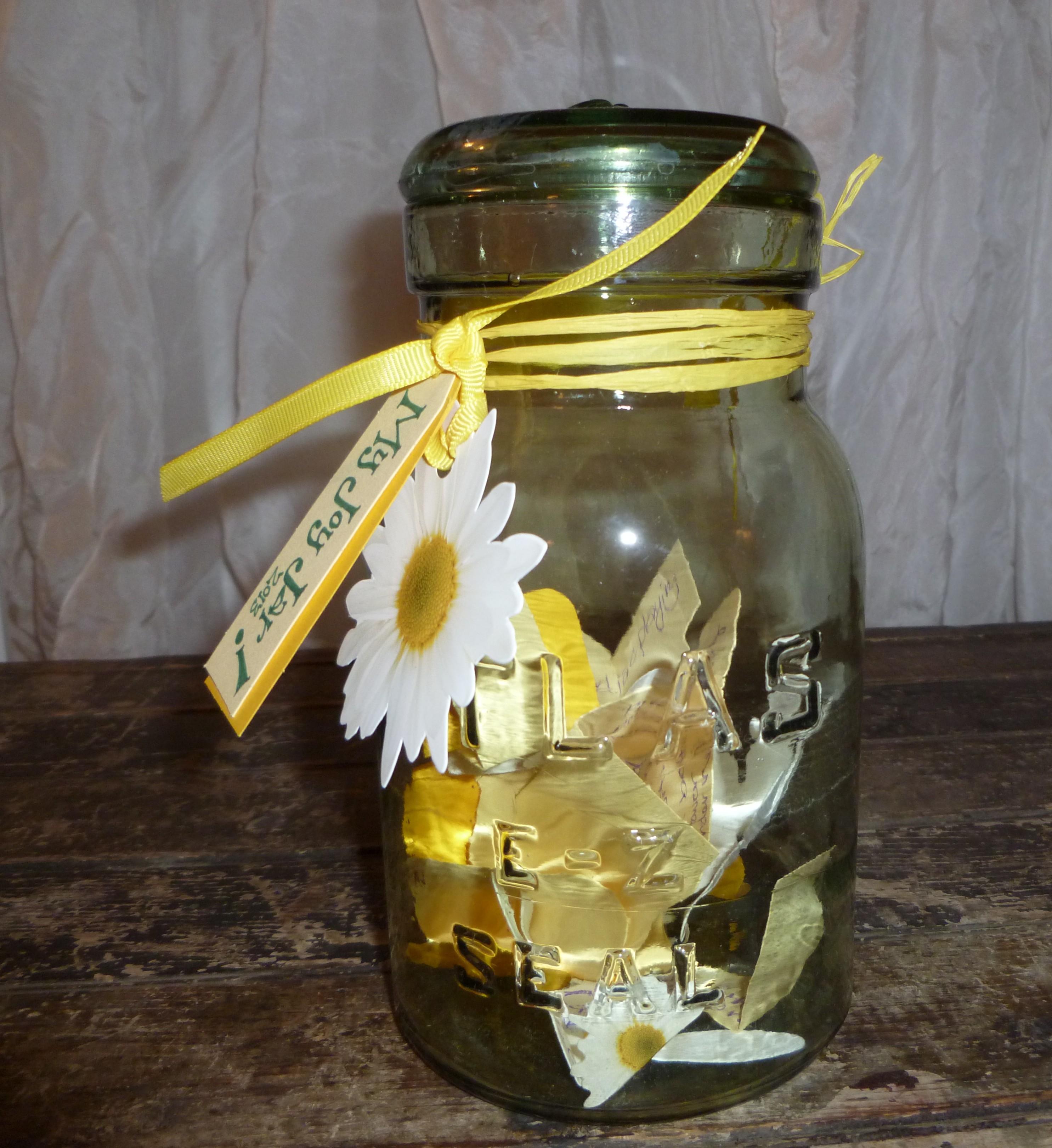
Joy Jar

P1040284A fairly normal week other than adjusting to Zodiac’s departure. It is nice that things have really warmed up and summer is on its way.

  • taking a nap
  • talking with my dad
  • sunshine
  • Casey’s 3rd birthday
  • Dune and Beacon snuggling
  • Dune’s personality
  • hiking with Dune
  • Bill getting home
  • email and photos from Waffle
  • snuggling with Dune
  • finishing planting my garden
  • Apex’s 5th birthday
  • getting a hair cut
  • raising Zodiac
  • dejunking the house
  • a one dog household
  • finishing Volume 6 of “Our Family”
  • growing things
  • hair out of my eyes
  • finishing watching the RootsTech feed

Pupdate – Zodiac

Zodiac has finally moved on from phase 1! Not only has he moved on but he has jumped to phase 4! I’m so excited and relieved. I was beginning to worry that he wasn’t enjoying training and/or his stubborn side was interfering with his training. Since two other dogs have showed up on the phase report with the same numbers as Zodiac, the most likely reason is that the trainer didn’t update their status for a couple of weeks.

The only thing about Zodiac that  is fine and light is his hair. He is a lab so he has plenty of hair. It is the thickest and scruffiest of all our puppies. Though as he has grown up it doesn’t seem so scruffy.

Phase Four: Intelligent Disobedience

Formal Harness Training
The dogs now have full freedom to make decisions and some mistakes with normal guidework responses. When errors occur, instructors continue to show the dog the correct answer before confusion sets in. Instructors still pattern challenging and advanced guiding decisions and responses.
Dogs are worked past open parking lot areas and difficult travel lines to further establish responsible line stability.
Working past challenging animal and food distractions
continues.
Instructors often “spot” each other (for safety), and practice short blindfold sessions with their respective dogs. This gives them information regarding what guidework behaviors are strong and weak in an individual dog. Practice routes that follow these blindfold sessions focus on development of needed areas and reinforcement of established responses.
NEW! After preliminary testing, more extensive work inside buildings begins.
Notable Accomplishment – Traffic Conditioning (Exposure)
Dogs are introduced to traffic safety problems and shown how to respond to them via leash cues. Dogs learn to “stop”, “hold line” when stopped, and “back up on their line” when a vehicle gets too close. They are also introduced to increasing their pace for any vehicle that approaches too close to the rear of the team.
Body Handling Acceptance
Continues as in Phase 3. NEW! New handlers are added to assess the dog’s comfort and willingness with strangers.
Physical Agility Programs
Continues as in Phase 3.
Obstacle Course Progression – Intelligent Disobedience Training Begins
All dogs guide in harness through a challenging obstacle clearance course with leash cues as necessary to move as a finished guide. Course design becomes increasingly more difficult, requiring problem solving skills.
NEW! Some clearances now require a stop. Intelligent disobedience responses are introduced after successful preliminary testing. Intelligent disobedience is when a Guide Dog purposely does not respond to a handler’s guidework verbal cue because it is either unsafe or impossible to follow through with the response.
NEW! Addressing errors is now introduced for basic clearance work. Dogs are given an opportunity to re-do the area (“re-work”) after being shown the error.
NEW! An overhead clearance is any obstacle that is above the dog’s head. Dogs are initially taught to target this type of clearance. The dogs are then taught to look up for overhead clearances through a graduated approach (teaching bar starts low, and is gradually raised as dog gains proficiency).
Socialization
Extra socialization assignments are done with individual dogs as needed. Some examples: harness or surface sensitive dogs; dogs that are reluctant to relieve on leash; or dogs that have questionable kennel behavior that needs “proofing” or further development in a “house” (office or dorm) setting (dogs that vocalize on tie down or crate, chewing propensities, etc.).
CWTs focus on additional relaxation sessions for all dogs as training progresses. These sessions could include one or several of the following activities: community run time, kennel enrichment programs, grooming, individual play sessions, office time at staff desks, and relaxing campus walks.
(from Guide Dogs for the Blind Phase Descriptions)

Organizing Family Papers

Here is a simple list of the important parts of organizing family papers (and other things too). This comes from Minnesota History Society. You can find the original info here.

Step One: Gather them together

  • Bring together those items that you want to keep permanently. Keep them together in a box or a file, and clearly label them as family papers and mementos.

Step Two: Identify them

  • Remember that this information is what will make the materials meaningful to younger family members and future generations.
  • Fully identify writers and recipients of letters. Either write this information (inpencil) on each letter, or write a separate note to accompany a group of letters.
  • Write onto the back of each photograph (in soft lead pencil) as much information as is known about it – who; where; date; event or other circumstance.
  • Medals and other memorabilia: write a note identifying the recipient, occasion, and date, and keep it with the object.
  • Write down other relevant information about the persons or events, particularly birth and death dates, parents’ and other family names, civilian or military service units or employment, dates and places of service, memorable experiences.

Step Three: Organize them

  • The goal is to keep them from becoming scattered or mis-identified in the future, and to help others follow what was happening at the time.
  • There are many options, depending on the number and types of documents. They may include: keep all of each person’s letters and other papers together; keep a single chronological run of all materials; keep one group of only letters, and another group of other materials; keep separate groups of each type of material.
  • If photos or other items were received with a letter, keep them with that letter.

Step Four: Put them in protective enclosures

  • The goals: protect them from wear and tear, from light and dust, from becoming scattered or lost, and from losing their identity.
  • Use good-quality boxes, file folders, and other supplies. Archival-quality (acid-free) is ideal but not essential.
  • Unfold folded items; remove letters from envelopes; place them in file folders.
  • Remove pins, brads, and metal paper clips.
  • Label each folder or other enclosure with an identification of its contents.
  • Use separate folders or boxes for diaries and other volumes, or medals and other artifacts; do not put them in a folder together with letters or photographs.
  • For some items – such as medals and other artifacts, groups of related photographs or post cards, books in poor condition – consider the use of specialty enclosures that are available from archival suppliers.

Step Five: Store them safely

  • The entire group of materials should have its own “home,” whether in a box or a file drawer.
  • Avoid extremes of temperature and humidity; keep them clean; protect them from mold and insects.DOABLE Sidebar O


Organize Family History Photos & Documents into Binders

Treasures in Chaos

Today I came across a good article on Squidoo about organizing documents and photos, so I’ll share the highlights with you. You can find the original article here.

The basic idea is to use three ring binders and sheet protectors. Then instead of sifting through boxes, everything is protected and easy to see.

  1. Sort papers and documents into family groups.
  2. Decide what to keep. (If in doubt, keep it)
  3. Sort loosely into chronological order.
  4. Place into protective sleeves.
  5. Put sleeves into binders (fixing order if necessary).
  6. Label binder and put it on a shelf.

Some hints from the article:

  • Buy sheet protectors in boxes of 100
  • Make sure they are acid free, archival, top-loading
  • Buy high quality binders that will last

My mom has done something like this when she was doing family histories. I think it is important to keep it simple and get it organized. Don’t be tempted do make it fancy. If you want to go back later you can.

What have you tried in organizing you papers, documents and photos?DOABLE Sidebar O

An Organized File System

DOABLE Sidebar OA critical piece to organizing any story project (or any thing for that matter) is a well thought out system. I’ve worked for years on an organizing system for my life and I think it is getting pretty good. But I can’t say the same for how I’ve organized my story projects. They aren’t terrible but they have lots of room for improvement.

So today I started doing some searching for ideas. I came across one that I’d like to try on Genealogy Tools via Organize Your Family History. The instructions are for the Mac. I don’t use a Mac but the principles are the same. One main difference is that instead of “alias” on a Mac in Windows it is called a “shortcut”. The concept of an alias or a shortcut is a great one that I’m really going to start using. Here is Ben Sayer’s series of short videos with very clear step by step instructions on setting up folders on your computer:

You’ll need places to put archival copies of scanned documents, photos, and other files on your computer. This series of video screencasts will walk you, step-by-step, through setting up a folder system and putting files into it. They’re created on a Mac and take advantage of the powerful alias feature in Mac OS X, but most of the system will work well on Windows too.

What do you think? What kind of file organizing systems have you tried?


“My Grandma Mary” update

I seem to have jumped through all the hoops to get a proof copy of “My Grandma Mary” printed by Lightning Source! I got an email today confirming the order from last week. The holiday has slowed things down but if I understand how it works, I should have the proof copy in my hand this week! I’m really excited to see it. If everything looks good than I will make it available for sell asap. My mom is usually really patient about histories but on this one she asks me about it every time I talk to her. It has taken a long time to get to this point. I’ve learned so much. But I’m sure there is a lot more to learn.

One thing I’ve realized is I’m glad there are places like Blurb and places like Lightning Source. Even though they are both print on demand companies their business models and target customers are completely different. I can see that I’ll be using both companies in the future depending on the project. For small runs, Blurb is a better choice. For books with a larger audience Lightning Source can be the better choice. While Blurb has a higher price per book they have no set up costs and no on going cost to keep the book available to print. While LSI has a much cheaper price per book they set up cost of about $100 mean you have to order at least a certain number of books to make it more cost-effective than Blurb. In the case of “My Grandma Mary” you have to order at least 5 copies to make LSI a more cost-effective option.

I’m still waiting to see how the quality of Lightning Source compares to Blurb.


A Few Things

I hope everyone is getting ready to enjoy the 4th of July. I’ve just decided to take the next few days off from posting on my blog, but I’ll update a few things first.

We are puppy sitting again. This time it is a 12 week old yellow lab named Redding. He is very light colored with a dark nose and cute as can be. He is doing well. We have him until the 14th when his family gets back from vacation. Dune is enjoying having a play mate.

I finally got Zodiac’s official portrait picked up. I’ll have to take a new photo of our wall and post it here.

I just ordered a proof copy of “My Grandma Mary” from Lightening Source. It should come pretty quick if I created the pdf files properly. It has been a steep learning curve switching from Blurb to LSI. Learning new stuff is good for me but not always comfortable. But to make “My Grandma Mary” available for more than my immediate family we needed to make this move.

Have a good holiday weekend and I’ll be back on track on Monday.