The Handcart Song

To honor my great-great-grandmother, Mary Taylor on this pioneer day, I want to share a favorite song of hers and the handcart companies. I learned a shortened version of this song as a child but I really like the message of the original version.

The Handcart Song

by John D.T. McAllister

Ye saints who dwell on Europe’s shore
Prepare yourselves for many more,
To leave behind your native land,
For sure God’s judgments are at hand.
For you must cross the raging main
Before the promised land you gain
And with the faithful make a start
To cross the plains with your handcart.

The lands that boast of modern light
We know are all as dark as night
Where poor men toil and want for bread,
Where peasant folks are blindly led.
These lands that boast of liberty
You ne’er again will wish to see
When you from Europe make a start
To cross the plains with your handcart.

As on the road the carts are pulled
‘Twould very much surprise the world
To see the old and feeble dame
Thus lend a hand to pull the same.
And maidens fair will dance and sing,
Young men more happy than a king,
And children will laugh and play
Their strength increasing day by day.

And long before the Valley’s gained,
We will be met upon the plain
With music sweet and friends so dear
And fresh supplies our hearts to cheer.
And then with music and with song
How cheerfully we’ll march along
And thank the day we made a start
To cross the plains in our handcart.

When you get there among the rest,
Obedient be and you’ll be blessed
And in God’s chambers be shut in
While judgments cleanse the earth from sin,
For we do know it will be so,
God’s servants spoke it long ago,
We say it is high time to start
To cross the plains with your handcart.

Chorus:
For some must push and some must pull
As we go marching up the hill;
So merrily on our way we go
Until we reach the Valley-o.

60 Years Ago Today


Thursday, 24 July 1952:

At 8 a.m. I had breakfast which included two rolls, jam, two boiled eggs, and hot milk for 1.23 marks. Helen and Margaret had made hats for all of us. There was quite a hub-bub over this! We sang Come, Come Ye Saints to celebrate Pioneer Day and played a volleyball game after breakfast.
Then we went back down to Stuttgart where we saw the remains of the royal palace. In front of a street side café we picked up the kids who had gone to town earlier. Andre parked the bus in Hauptbahnhoff, the train station, and then everybody went shopping for 45 minutes.

Mrs. Hansen and I inquired about Gartenschau at the information center, but it was 20 minutes there and 20 minutes back. I guess we will have to forego that pleasure. So we got a map of Munchen while there and tried to find out about what was going on.

I went across the street to the big station to look around. I found book shops, snack bars, and keno, a bingo type gambling game. We ate hamburgers and donuts from a military restaurant with Jerry, Carol’s cousin. We had a picnic on the bus to celebrate July 24th.

As we left Stuttgart on the super autobahn, we were allowed to go any speed our bus could take us. Once again there were more red roofed villages on either side of the autobahn. As we left the Black Forest, there were big fields of cabbage on fairly level farm land. It was grain harvesting time. I observed men loading grain bundles on a big new truck in one field, tractors pulling a wagon in another field, and horses and wagons in many other fields. Everyone was working with the men including women in dresses, boys, and girls wearing skirts.

Our drive took us into Wurtlemberg, Germany, as we were heading towards Bavaria. In the bus we discussed how Bavarians were said to be poetic and musical, but not philosophical. Also how the Danube River geographically borders between Bavaria and Wurtlemberg. In Ulm we were in two hotels with 19 people in one hotel and the rest in another hotel.

Then we stopped at Ulm Münster which was a Lutheran German church built between 1377-1494. It had been the tallest structure in the world until the 20th century New York skyscrapers were built. I had to walk back a block just to get a picture of it.

Afterwards, we hurried over to Woolworths which was just like the Woolworths in America. I bought a package of combs for 65 marks. I almost got run over getting back across the street to the church for a tour.

While waiting we learned that the stain glass windows on the sides of the church were shattered during the bombing raids in World War II. As a result the windows were replaced with ordinary windows. However, the windows on the church ends were still intact. Though only part of the stain glass windows on one side was visible since the big pipe organ was high above the entrance.
Next was the baptismal font and statue of Bach and Martin Luther. This church was now called Münster and had been taken over by the Protestants. I spotted plaques in memory of the officers and men soldiers that had fallen in all the various wars.

After the church some G.I.s guided us over to Rommel’s house where there was road construction. His house looked just like it did in the movie Desert Fox where the director of the movie was a prisoner of war for three to four years in Russia. The house was now used as a rest home for convalescent children called Kinderkurkeim. The children there sang for us. And they wanted us to sing for them so we sang Home on the Range. Then we all sang Guten Nacht or good night together. One doctor commented that “This is much better than fighting.”

Utahns Visit Grave of General Rommel

Editor’s note; This is another letter from Mrs. Afton A. Hansen of Provo touring Europe with a group of Utah College students.

Dear friends,

The eve of July 24 was spent at a rest home for old ladies which was beautifully situated in a wooded area. Here, a most delightfully lovely girl from Stuttgart, name of Sigrid Schael visited with us. Some of you may remember her being in Pleasant Grove, Cedar City, Provo and Logan at a 4-H Club convention.

With newspaper caps on our heads, and singing appropriate songs, we traveled to Ulm where the tallest Gothic cathedral majestically stands.

This July 24 culminated in a touch of reverence. Three fine GI’s located here with the Army directed us to the home were Field Marshal Erwin Rommel of the German Army, lived prior to his death in 1944. You may remember the story of his bravery as told in the picture show, The Desert Fox. His grave is well-cared for. Standing around it we heard in quiet tones the story of his bravery and foresight and in solemnity paid tribute to him.

His home is now a city-owned convalescent home for 80- to 90 children who were returning from a hike as we came out of their temporary home. After a few greetings from the doctor, the children arranged themselves on the doorsteps and sang several German songs to us. Asking for a song in return we sang Home on the Range.

They loved it so we sang Gute Nacht and they joined in. Sweet harmonious emotion was felt as we ended by saying “Gute” and they said “Nacht.” The doctor nodded his head and said, “Yes, and this is as it should be, good harmony together.”

This doctor, a short time previously had returned from three years in a Russian concentration camp and had nothing good to say about it.

Afton Hansen.

A little way off in the town of Herrlingen, about 5 km from Ulm, was Rommel’s grave. It was a simple headstone in the shape of a swastika. As we trekked back to town, we went past a field full of tractors.

Half of the group stayed at the Gasthaus zum Fuchs Hotel. I entered through the dining room and then on to room five. It had polished floors and was nice and clean. There was a big feather tick on only one of our beds and the window opened on the front street which had road repairs going on.

Alicia ordered a meal for me as I hurried fast and washed my hair in cold water. I ate dinner in my room of breaded veal and trimmings for 2.50 marks plus 10%. Afterwards, Alice and Eloise each had a bath for a little under 2 marks. They had to let the hotel know in advance so they could heat the water.

After getting ready we were off to the movies. MPs or military police stopped us and we found out that keno started at 8 p.m. So the police told us where the Service Club was. We wandered around the deserted streets for awhile, looking at bombed out buildings. It was chilly outside so I was so glad I brought my coat. Then we went into a large Catholic Church just before it closed.

Then we strolled around again in a circle to the Service Club. There I bought military script from a service man and then I indulged in pie à la mode and banana split with pie instead of the banana. It was so good.

After we discovered the game room and dance hall above. The place was almost empty since it was near closing time. The hostess was hospitable to all of us, but after awhile we headed back to our hotel for a good night’s sleep.


60 Years Ago Today


Wednesday, 23 July 1952:

I was up at 6 a.m. to get my tapestry deal taken care of. When we finally got over to the post office across the street we found that no one spoke English. Ione ran over to get Dr. Watkins to help us. Now we were cooking with gas. We finished there and on the way back I noticed how their waste baskets were attached to the light posts.

We went back to the Strasbourg Cathedral, learning that it was built in the Gothic style and later changed to Romantique architecture. The pipe organ was located high up on one side. The clock was very sophisticated and told not only the time, but also the seasons, zodiac signs, and eclipses. It could tell me most anything I would want to know it seemed. If I only knew how to read it, I might add. The clock struck 10 a.m. while we were watching. Everything on the busy clock did something. One little cherub hit a ball, another cherub turned over an hour glass, another figurine high up hit his bell, a priest moved around, and a big organ started playing.I moved on and saw people reaching through a fence around the bishop’s pulpit to rub St. Peter’s head.

We traveled back to the hotel to see if Andre had arrived. While we were waiting the hotel employees became really unhappy with us since we were cluttering up the lobby. A little before noon Andre pulled in with the bus. That was when he thought we were supposed to be leaving.
Now packed in the bus we learned that Albert Schweitzer studied at Strasbourg University before he left for Africa. He received all his degrees from there. Dr. Schweitzer was a universal genius, a theologian, organist, philosopher, physician, and medical missionary. He had many interests and talents, but couldn’t step on a worm. He wrote the most complete biography of Bach. Herr Watkins said there were still many people that knew him in this area like barbers, clerks, and others.

Herr Watkins told us stories about Schweitzer as we waited at Berden, Germany to cross the border again. We had individual declarations this time so we could change money in Germany if we needed to. Finally Dr. Rogers came. The customs man had to sign all 36 of our declaration forms.

We found ourselves back in Germany again. There were tree lined roads and Strasbourg architecture. War ruins were still apparent here and there. I learned that the fields we saw as we came into Strasbourg were tobacco. I had noticed them before but didn’t know what they were. Other than the tobacco fields the countryside here was quite a lot like many at home with sugar beets and potatoes.

Just around the next bend we came upon something not quite so typical. There were rows of fruit trees or grape vines down through patches of potatoes or beets. It was a good way to save space but this layout necessitated hand cultivation.

I observed another crucifix by the roadside. This seemed to be common for the German people. Again I saw white strips on the trees. Vineyards and fields were located on the slopes, hills and mountains. We passed a small canal with high banks, where a lady was just finishing a big batch of wash. The clothes were spread out along the bank to dry.

Soon after we went back into the hilly country again. I think the Germans must plant a tree every time they cut one down.It seemed we’re taking a different route to Stuttgart than our itinerary called for. During our shortcut, I observed men and women in their native dress shocking grain on the hillside. There were lumber yards and saw mills by the side of road. I spotted grain on a cart that was being pulled by three people. Farther on there were three women walking down the road with two huge baskets full of berries between them.

As we climbed gradually up through the Black Forest again there were tall straight trees again. While we wound to the top a beautiful view opened up to us below of the fields and forest interspersed together. There were all different shades of green and yellow with diverse shapes and sizes of fields. A man was trimming grass along the road side and sweeping it over the sides of the road.

At the top of the pass in Freudenstadt, the city of joy, there were petunias and geraniums in almost every window. It was one of the most beautiful little German cities. I observed new buildings, apartments, and houses. Andre almost scared some of the cyclists right off the road with our blatantly blaring horn.

Then we reached a plateau and then went down into another valley. Meanwhile we left the forest behind, I saw fields and orchards ahead of me. Under a high rail trestle there was a field laid out with racks the shape of big half moons which dried the hay in the fields. I saw how little boy blue got under the haystack.

The majority of German houses had red roofs with wooden fences. As we traveled through the really thick forests we ran into road repair which diverted traffic one way. There were orchards with apples right next to the roadside and groves of tall slender dark needled pines on the other side. Talk about variety of orchards and trees in a small area. Later on I found train tracks right next to the road we were on. There was only one foot between the road and railroad tracks.

We passed the border between the French and American Zone of Occupation from World War II. Farther down the road a piece, we came upon a whole convoy of United States trucks. We drove under the autobahn, the super military highway built by Hitler. As we came into Stuttgart we passed the 7th Army Headquarters.

In Stuttgart there were more red roofs, cathedral spires, and a famous library in ruins. The library had 600,000 volumes, hundreds of manuscripts, and specimens of early paintings. The Natural Historical Museum, Haupt Buhnhopitation, and creative arts building were bombed. Just the fronts and shell were left.

We circled around a little pond and park where people were carrying briefcases. Many boys and men were wearing lederhosen, leather shorts. I spotted a car that had a big dummy on top which held a newspaper. It gave me a funny feeling to be here in this town with all the bombed out buildings around me. At the same time I watched all the hard working but non-prosperous looking people that seemed to struggle in their lives.

As we stopped nearby, the Germans all seemed quite curious about our bus. Herr Watkins told us Schwabens, this region of Germany, were a happy curious people. Then we stopped near the station and American Express in search of our hotel. People in the streets looked at us but when they saw us looking at them they turned their eyes downward.

Alicia said Gutentag or good day to a man who didn’t turn his eyes down. He stopped to talk with us and told us about the Killesbergpark, an urban public park, that was the most beautiful place in Stuttgart. Some American soldiers stopped to talk to us. A little later we gathered to go to our hotel. Personally I hoped it wasn’t in the woods again with candle light.

On our way to the hotel we passed a beautiful huge building with only the front of it left. Shops were still operating behind the front walls. We discovered we were to be led to our hotel by a small black car.

Finally, we found our hotel, the Walderholungsheim Degerloch. It looked like an old ladies home by the type of clientele that were there. We concluded it was supposed to be some kind of YMCA. I noticed large red surfaced tennis courts and paths that led into the woods in all directions. The terrace was nicely landscaped with chairs and tables all around it. Shrubs were pruned sort of like bowling pins.

My room was in a separate building. There were basins, pitchers, and two dark wool blankets. The top sheet on the bed was filled like a comforter. It was too far from town to make it profitable to go back for the evening, so all of us had a good dinner at the hotel or YMCA. For 2.35 marks I had soup, three sausages, potatoes, salad, and coffee ice cream. There was a family table for all of us to eat together.


60 Years Ago Today


Tuesday, 22 July 1952:

Dear diary for some peculiar reason I didn’t sleep as well last night as I was accustomed to. Of course, I was rather uncomfortable with my glasses, earrings, and copper belt on. However, I was thankful for everything else I had had on to keep me warm. I woke at 5 a.m. Usually it is rather hard for me to get up that early. This morning was different, because I woke up raring to go.

As I looked around I found a window open right at the foot of my bed. No wonder it was so cold last night. I cleaned my face and Alicia woke to solve the secret of my disappearing blanket. She had intended to just borrow it until I came to bed but she had fallen asleep. So had the rest of the crew so there was no one to tell me where my blanket was.

I found the washroom with the long trough and brushed my teeth. One of the kids asked for hotel stickers before we started back to the bus. The walk back was quite refreshing as it helped to get the kinks out of my muscles and bones. The forest was misty. It seemed much shorter than the night before.

At the bus we discovered our bags had been taken down and locked inside for the night. We got them out so they were ready to go back on top and then found some oranges at a stand nearby for breakfast. I snapped a picture of hay making on the slopes above the bus.

On the road to Titisee I observed straight pines growing close together with a thick underbrush. No wonder these forests appeared black far away. The road was being repaired. There was Lake Titisee, clear and sparkling below us with a beach and lots of boats. Herr Watkins and Rogers set off to check the temperature of the water. After checking they decided to spend 1½ hours here.
Watkins, Dick, Helen, Margaret, Virginia, Mary and I jumped in to go swimming. Others soon joined us. What a refreshing swim and bath for about ten of us. It was cold at first, but very invigorating. We had a good scrub down with soap and a wash cloth. We took turns scrubbing each other’s backs. We even attracted an audience. Then we dried out in the sun.

Back on the bus we watched the beautiful Black Forest country go by. Andre stopped on a hill above Triberg for a shot of the valley below. It was my last picture so I tried to get a new roll loaded in my camera but the bus was ready to go. In my hurry I accidentally broke the film.

After awhile we stopped in Triberg to shop for cuckoo clocks and eat lunch. We found a nice place to eat at a hotel after wandering in several cafes. I had a delicious meal of soup, roast pork, salad, and potatoes for three marks. I asked for bread and water. It cost extra for bread whereas in Italy it was included in our first and second courses. Watkins read an article in the Hamburg paper to us about friends from Utah while we ate.

We discovered the stores were closed till 2 p.m. and that was the time we had arranged to leave so we decided it would be okay to stay a little longer.

We wandered around the stores for about 15 minutes. As Alicia went back to the bus I told her to honk the horn if the group was ready to go. As I browsed around the book shop there were lots of interesting German books, Reader’s Digest, and children’s books. I thought I heard the horn so I went outside and there was the bus. Some of the kids had been waiting since 2 p.m. and I was really in the dog house. There was a big meeting and the group decided to fine late comers. What a “dealy”!

Next stop was the Rhine Valley where men were putting up hay with ox teams. I glimpsed rows of crucifixes. As we neared Strasbourg, France, I saw typical Strasbourg architecture of medieval structures with black and white timber-framed buildings. Then we reached the border at Kehl, Germany, where there was more red tape. I walked through customs and my passport was stamped twice.

As we crossed the Rhine River, Andre was happy to be back in France. I spotted kids swimming. We crossed the international bridge, and Place des Vosges, the oldest planned city square.
The hotel in Strasbourg was quite different from the rustic hotel the night before. Narrow and tall it sat on a big square near a station with a sidewalk café in front. Our room had two double beds and pink toilet paper. As soon as we were settled I went down to check with the hotel man about Lyon tapestries.

22 July 1952
Hi Folks,
We’re back in France for one night. Last Sunday I gave my German talk twice, once in Zurich in the morning and again in Basel at night. Last night we really roughed it for the first time way up in the middle of the beautiful Black Forest. We slept on beds like we had in the dorm but they weren’t nearly so clean or comfortable.

Then I noticed Bev and the gang. I chased them down to Cook’s to find out about sending money to the missionaries, but they were closed. A fellow came to the door, but he couldn’t give us the information we needed.

Strasbourg was a picturesque city. I went over to the Gothic and Renaissance cathedral to get pictures and I met up with part of the gang there. The cathedral had a beautiful ornate facade facing west. The building was so tall and the surrounding structures were close. Because of this it was hard for me to get pictures of the facade up close. I never finished getting that shot, but I got a picture of one spire.

I met some Egyptian students who were studying medicine at the Strasbourg University. They said the United States was 50 years ahead of Europe in science and invited us to eat with them. I passed on the invitation to dinner and wandered around the older section of the town down by the river. I found more of the typical Strasbourg architecture with sagging buildings, narrow structures, and window flower boxes.

As I continued through Strasbourg, I saw war ruins. Some buildings were gone except for the facade or side walls. Other structures looked like they had been cut in half. Strasbourg was a bilingual city that passed back and forth from France to Germany many times. The older population in the city spoke German whereas the younger population spoke French.

Overall prices were higher here in France compared to Germany. I bought a pastry and ate it along with the lunch that I had purchased in Germany. Then I was off to bed early to make up for the night before.


50 for 50 – #29 Camping

the crew at girls camp

When I put “go camping” on my list of possibles to do for my 50th year, I didn’t envision the kind of camping it turned out to be. A few months ago I was asked to help with Girls Camp for the young women in our church ages 12 to 18. The timing wasn’t great but I felt like I should help so I said yes. I had lots of fun working with Cherri as co-directors of camp. We have different strengths but similar views on how things should be handled. She took care of all the food planing and I got to do the kinds of things I like to do. Well this week the rubber meet the road when we headed off to camp bright and way too early Monday morning.

two bucks who walked through camp

We were lucky to have a spot at the wonderful Heber Valley Camp. It is a lovely place with lots of evergreens and quakes. The cabins are nice but simple with electricity. There are flush toilets and hot showers. The cooking arrangements are great too with a fridge and two-three burner propane stoves. The only downside was the fire ban due to the dry conditions.

On our three mile hike

It was a fun week with lots of hard work by both leaders and girls. Not everything went according to plan but most things were successful. The girls got to take part in a challenge course with a pole climb, a walk across a wire and then a zip line. They got to ride in canoes while the leaders tried to navigate the lake in paddle-boats. We had a hike everyday including a sunset and a sunrise hike (I think the girls might hate me for the sunrise hike), plus a three-mile hike to fulfill the requirements for the first year campers.

Pat and Pam in the paddle boats

We made survival bracelets out of paracord and had bedtime stories every night. The food was great and we had more than enough of everything. One of the high lights was when the older girls when on a short overnight backpack trip. We had a small group left in camp with just the first year girls. For a special treat Cherri took clay pots lined with foil and put in a couple of briquettes. Then the girls roasted marshmallows, Starbursts and other things over the hot briquettes. It was lots of fun to experiment with adding things like strawberries to s’mores.

Legacy Lake

Camp was a ton of work and I wish I had been more organized when we left. But overall I think it was a successful week with lots of opportunity for the girls to learn new things and grow in their appreciation of God’s creations.

Monk’s Hood


60 Years Ago Today

Monday, 21 July 1952:

We had a continental breakfast at the hotel. I spent the morning trying to find the best deal for my money. I cashed $50 for marks; $10 for French francs; and $30 for Austrian schillings.

When we finally finished our money transactions, Helen and I took off for the famous Basel Zoo. We bought peanuts and saw many European animals that were strange to me. Signs by each one included the name of the animal in three languages plus a picture and explanation. Then a map marked in red showed the animal’s habitat. It was a clean zoo that didn’t smell. Very clever homes were fixed for the zoo animals to simulate natural habitats. I took pictures in front of the giraffes.

At 11:30 we hurried back to the hotel for lunch. I had three servings of Birchermussli as an appetizer. Our waiter, from Rome, brought me a delicious mushroom dish. Then I ended the meal with ice cream.

On our way out of Basel, we visited Dornach and the Goetheanum, the most unusual building in the world because it had no right angles. A school of spiritual science, it was founded by Dr. Rudolph Steiner. I caught sight of houses which had the same architecture. Plays of Goethe were produced here annually in an auditorium that seats 2000. They believed in the philosophy of reincarnation. Beautiful windows of colored glass, green, blue, lavender and gold, showed man’s struggle to reach goals. There were huge wood carvings from the original temple. The boards were placed on top of each other and then carved out to represent the struggle between light and dark.

We traveled over the Rhine River on a bridge that had dynamite holes from World War II. The bridge had been fortified. Street cars could go back and forth between Germany and Switzerland. The French usually traveled over to the German side to eat on Sunday, because it was much cheaper.

Then to Lorrach, a border town, where we crossed back into Germany. We had to declare all of our money and ran into lots of red tape. We spent our last few cents of Swisse change on chocolate. Kids talked about how the Germans hated us. I wondered if this was really true.
Then we proceeded back into French controlled Germany. I sighted the Black Forest in the distance which was black at night anyway. There was a cobblestone road that ran through the town. It was raining as we came into the countryside. I discovered a pretty clean stream of water that wasn’t milky like the water in Swisse streams. There was a man fishing. Another man stood by a watering trough combing his hair as he stared into a looking glass.

Then we passed a tall slender church spire in a little town called Silronaven. There was a sign going into town asking you to be careful, and a sign on the way out saying thank you.

I observed a steep hanging roof as we came into the Black Forest again. The houses and barns were mostly red tiled roofs. There was a crucifix along the road going into Todtnauer. We stopped to look around. In the middle of town there was a great big church with two clock towers on a hill. I saw a different ceiling octagonal shape in decorated wood, huge chandelier, and rounded arches. In front of the church there was a huge elaborate altar with a little fountain and rock garden on the side of the hill. Later, I passed by a bronze plaque with a monument to soldiers.

We were back on the road again. We drove past red hay piles on the hill and a big stack of wood leaning up against a pensione boarding house. I spotted scarecrows in a little field and a bench which sat on a hill by a tree. We traveled up a narrow winding road through the Black Forest to our hotel. And we passed a big ski jump and lift.

The bus stopped at a rest home. It looked like we had to walk from here. First we went into the rest home to find a WC and walked through a game room with table tennis. People of all ages were convalescing here. We found out the walk was 45 minutes to our hotel.

For this reason we traveled light without our baggage. As we started up the trail a man from the hotel was supposed to meet us. We didn’t see anyone so we hiked on. I had a refreshing walk over hill and dale with my trusty sandals. I kept wondering each time we saw a building in the distance if that was our hotel.

Here we were wandering around in the middle of the beautiful Black Forest on our first night in Germany. And there were wild flowers everywhere around us. Who knew what experiences were in store for us in Germany, the country of many of our ancestors?

Perhaps if we had not been so hungry we could have enjoyed our hike even more. When a little truck wagon came along loaded with part of our crew and a few small bags, we were glad to trade places with some of them for the remainder of the journey. We imagined and hoped that we had sighted our abode for the night up ahead.

It was the only building in view and we had already been hiking for some time. Immediately I discovered that the rocks in the road were much rougher riding than walking. Luckily, we were not far from the barn shaped house with the typical low hanging roof. The building we had spotted earlier turned out to be the place. Yea!

As we entered there was a quaint and rustic dining room. We were so hungry we could have eaten most anything at that very moment. But first we went to our rooms or should I say room. Dr. Watkins was a little worried how we were going to like our room. There were 20 of the girls in my room and the balance in another room. And the men stayed in another room up in the attic.

The hotel had rickety stairs and candle light. This was indeed a new experience. I found a dirty unbleached sheet with only one dark horse blanket folded at the end of my bunk bed. There were ten two deck bunk beds lined up in a row in a room barely large enough to hold the beds. I navigated a narrow aisle that ran along the ends of the bed in the center of the room.

I don’t believe anyone particularly relished the prospects of this set up. At the same time we were all getting a big kick out of our experience. We went down to the underground area to find a couple of troughs for our toilet. There was running water no less, but cold running water.

Then we hurried back to the dining room for food. The waning prospects of a wonderful night’s rest had not dimmed our appetites though. I was worried about Irene, because she wasn’t there. Finally, Irene arrived. Virginia played the piano for us while we were waiting for chow. I must say that when the food came there was lots of it, but it wasn’t too well seasoned. But we sure had lots of food—soup, roast veal, potatoes, and salad.

The whole deal of dinner was a little confusing, because they didn’t have enough of one dish to serve all of us. The waitresses were all confused and there were different prices, but we all managed to get sufficient to eat. A soldier and French student were there also.
After dinner the lights kept dimming, but I decided to spend a little time on my diary. So when I could see from the candle light I wrote.

Irene kept rambling up and down and Andre wandered through as well. He had been dancing with the French people. Some of the other kids crashed the party too. There were four or five men at a table that were drinking, laughing, and talking. One man talked especially loud. The men were still going strong when I decided to give up and turn in about 1 a.m. or so.

The dungeon or wash room was so dark I skipped my tooth brushing ritual. I crawled up the stairs to find a candle burning in the corner of the room. Some of the kids were snoring already when I noticed that my blanket was missing from my bunk. I guess somebody figured they needed it worse than me? I reluctantly put my jacket on and my coat over my feet. As I put out the candle and tried to sleep, I was cussing the cuss who took my blanket!

Modern Pioneers:
Utah Group Touring Europe Gets Taste of ‘Roughing It’

Dear Friends;
Waiting at the border to enter Germany, where we filled our forms, counted and reported our money; where someone from around the corner snapped the picture of our bus; where we were hungry, hot and dry,— these were mere trifles to the remaining incidents of this Monday.

Monday, more than once, has been a somewhat grey day for us. Because so many museums are closed on this day we missed seeing the human dolls.
With a sudden clap of thunder and a downpour of rain, we entered Germany and were long in the Black Forest. A black horse standing near the dark, thickly placed pines was vigorously shaking his mane and tail against those black horse flies, which we found later to be so annoying.

Having expected tourist travel to be somewhat crowded in spots we were sharply made aware of it when we learned that our previously booked lodgings at Titisee were unavailable, and we were hoisted none too gently to the mountain. Once again, we took the least amount of baggage for an upward climb.

Said the director, “Some may ride, but some must walk. Take your choice. The hikers will fight horse flies, while the riders will be jostled on the floor (no seats) of a tractor drawn hay cart. Hikers may pick beautiful flowers along the way. Riders must move over to make room for the driver’s big, black, barking dog.” Thinking of our big black dog at home, I chose to ride. Anyway, I was suspicious of those 45 minutes hikes, which usually turn out to be twice as long for us. Luckily, the dog understood English, so “Get out” he did, running and barking through pines, grass, and flowers.

The hikers rationalized as they trudged—”Well, after a hike like this, the American Express Company must be leading us to a lovely spot in the mountains where we will have clean sheets, down pillows and coverlet and running water.”

Said another hiker, “Yes, but maybe the water will be running out of a large china pitcher into a large china bowl, the like of which we have used before.”

As the evening haze crept over the hills, we could see in the short distance, our abode for the night. Todtnauerhutte (Dead Valley Hut) with its steep roof and low overhanging eves, built thus, as a gesture against heavy snows.

Another group of 40 girls, staying for 15 days, had preceded us to the hut thereby, with us, creating an overcrowded condition.

Inside, the dimly lighted dark walled room we seated ourselves at long tables covered with green, brown and white checked table cloths. Served family style, the food was abundant, good and inexpensive. We ate heartily. Never again can we believe that Europeans go hungry.

The carved wooden crucifix hanging in the corner seemed as out of place as we did with the tousled, rugged mountaineers drinking beer at another table.

The sleeping rooms—oh my, oh my. Our small room, Koje IV, was fully packed with three double bunk beds, each having a grass filled mattress, no sheets, no pillow, just one small dark blanket. The comments, giggles and jokes of the girls were enough to keep us warm. We really were close friends that night. Without undressing, we put ourselves on the beds. After a short sleep we were disturbed by a happy chattering group, from a YMCA, preparing to go to Switzerland. About 1:30 a.m. they departed, and we slept again. It seems that many attempt crossing the border at night without passport.

By 6:30 a.m. we were ready to find the bathroom. What, no water? Oh yes, down through a catacomb-like corridor we found it. A long cement trough with three cold water taps. Refreshed with cold water and warm humor, we once again waited to be lifted down the mountain. Hearing a familiar noise back of the house someone said, “This must be it, I recognize the bark.”

Bumping over the hill and vale, rocks and ruts, in the early morning was delightful. We were soon back on the bus, on our way to Strassbourg, happy and none the worse for the Monday Fare.

Afton A. Hansen

Zodiac’s Littermates

Pomona with Zulu, Zodiac and Zenith

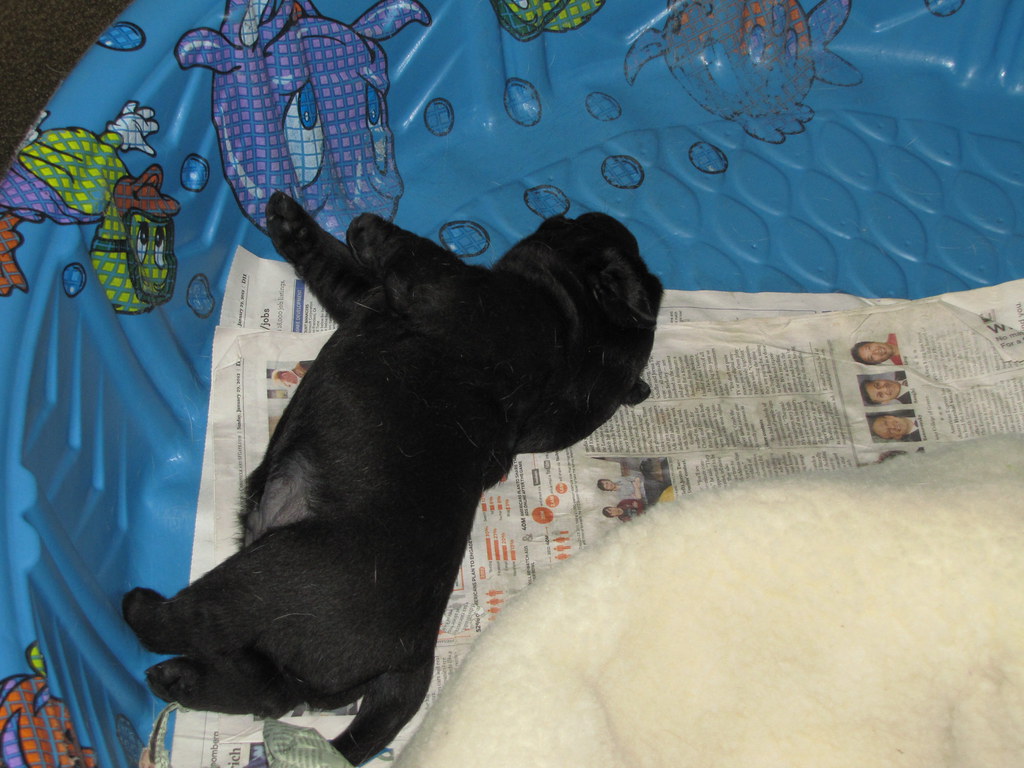
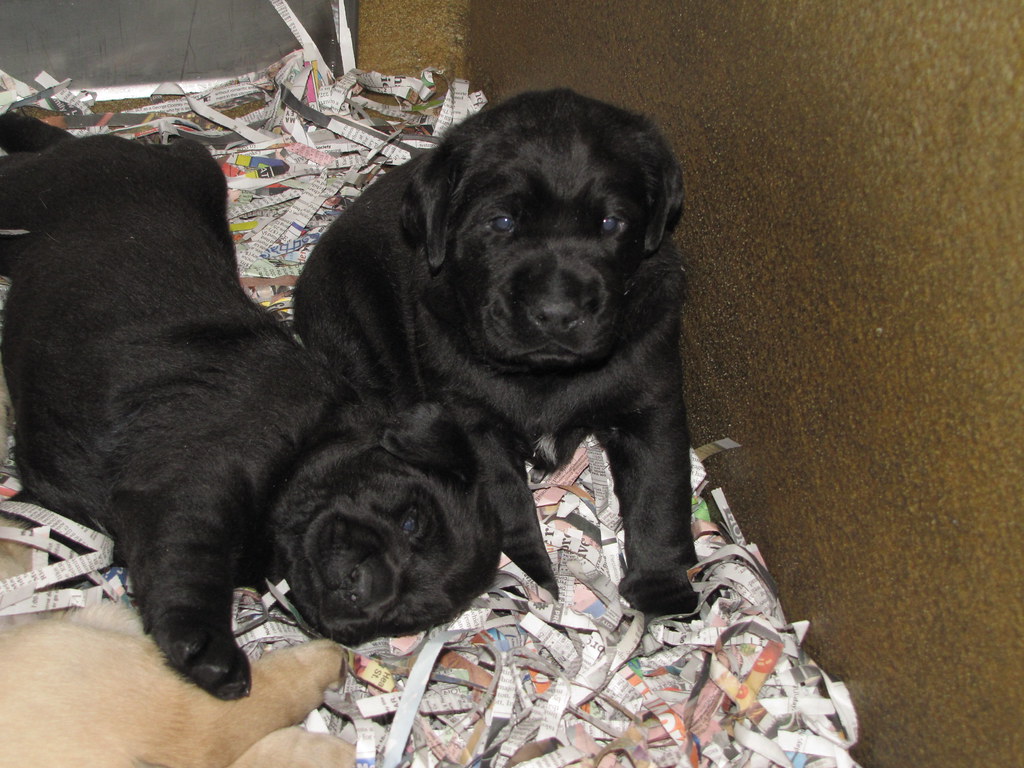
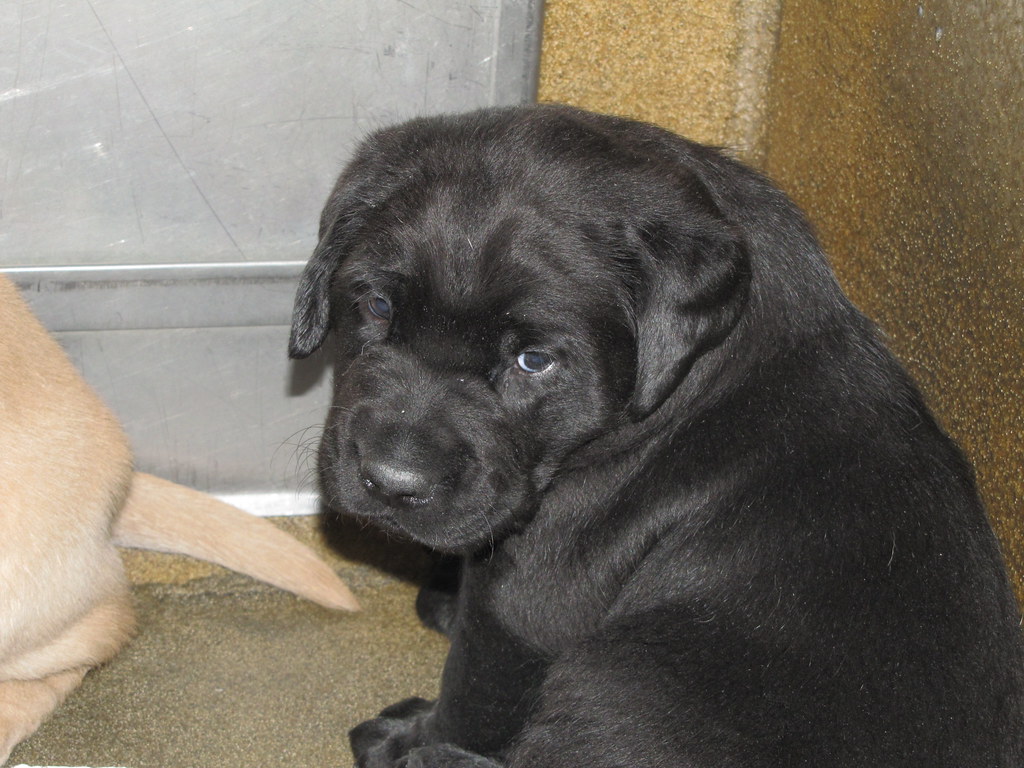
One of the things that Guide Dogs for the Blind does for puppy raisers is the littermate photos. With each litter of puppies they take photos and a couple of videos when they are a week or so old and then again a couple of weeks after that. With Yakira they had the photos uploaded to their Flickr site before we got Yakira but Zodiac’s litter was posted not long ago. Today I finally had a chance to go and look them up. I was also able to look up the names of his siblings in this year’s Fun Day book. The yellow lab in these photos is Zodiac’s sister Zulu and the other black lab is his brother Zenith. Sometimes I think I can tell which one is Zodiac but I don’t think there is a way to be sure. Correction on that, as I was just looking closer at these photo I realized that Zenith must be the one with a small white spot on his chest. Zodiac doesn’t have a white spot. Yeah! I’m really excited that at least in some of the photos I know which one is Zodiac. Anyway, I enjoy seeing how they looked when they were just tiny little things.

March 13, 2012 Video (Zodiac is the one hidden under the newspaper)

March 27, 2012 Video (zodiac is the black one not moving around much)

Zodiac

Zodiac and Zenith

Zodiac or Zenith

Zodiac or Zenith


60 Years Ago Today

Sunday, 20 July 1952:

Up at 7:15 a.m. all four of us had to bathe in the wash bowl. Alice and Carol had the best turn at the wash basin. Then we ate breakfast at the hotel. Song practice was scheduled at 8 a.m. but the sopranos were late. So I went over to the church with Elders Merrill and Bradshaw.

Chorus practice started at 9 a.m. Then I wandered out into the garden to practice my talk. I was hardly nervous at all. Church began at 10 a.m. with Dr. Rogers first on our program and then the sextet singing group. However, Alice didn’t sing. Virginia talked and then yours truly was next.

I’m sorry to admit that I didn’t know it as well as I could have. Afterwards the chorus sang, You’ll Never Walk Alone and Alene and Betty talked. Both of them did well. Then Florence sang, Herr Watkins talked, chorus sang America and the Branch President talked with Elder Merrill translating. He thanked us for the program, and told us how wonderful it was to have us there and wished us a pleasant trip. The clerk took care of business and the meeting lasted over the allotted time.

We dashed back to the hotel to get our bags down the stairs. Then we went to eat at a cute restaurant down the street. I had my first birchermussli. At the bus members and missionaries were there to see us off. I got a picture of the missionaries and our whole group by the bus.

On our way to Basel, I spied a tank barricade along railroad tracks. In Basel we stayed at another Hotel Victoria. It was as nice as the other Hotel Victorias had been. We cleaned up and left to visit the mission home about 5 or 5:30 p.m. Then we walked down past the Münster Cathedral that had green vines on the front. I spotted the mission home that was a big white house. It was comfortable, modern and clean, just like home.

I met Dr. Kezerean’s brother, Ethelyn Taylor, Nola Allerman, Palowski, and other new missionaries. Brother Meyer and his mother were from South Africa. President and Mrs. Bringhurst found the Deseret News for the last month and we really had a field day with the news from home.

We were off to church with the whole crew strung out over several blocks. Missionaries lined up to greet us. There was an Elder Wendell Stucki from Rexburg. The group did a repeat performance of the morning program. Herr Rogers introduced us all again and we had a great time. I don’t think I did any better on my talk or even as well as I had done in the morning program. However, I did catch a few pronunciation errors which Herr Rogers brought to my attention. President Bringhurst seemed quite thrilled with all our talks.

After church I met one little lady who was related to or knows Jack Sommer in Rexburg and another one who knows someone I didn’t know. I met a little man and his wife who were coming to Ricks College to work in about three months. They wrote their names for me on the back of my talk. As we were leaving I talked to a man whose daughter was in Salt Lake. I had to dash off to get to the hotel for dinner at 9 p.m.

I was almost the last one around so Herr Rogers let me ride in President Bringhurst’s car with them. We drove to the hotel and the chicken was really delicious. Afterwards, I walked over to the station across the street to see about getting my money changed. Unfortunately it had closed five minutes earlier. So I went for a walk down to the Rhine with Elder Telford. We saw the monument to the Swisse by the same sculptor who had made the Statue of Liberty. The Rhine River looked quite beautiful at night. We talked for awhile and then strolled back home past the Migros shopping center.

Traveler Describes Scenic Wonders of Switzerland

Editor’s note: This is another in the series of articles being written by Mrs. Afton A. Hansen of Provo, who is touring Europe with a group of college students.
Dear Friends;
Would you like to hear something about the Jungfrau (mountain) and the Glacier Garden before you leave Switzerland in world travel with us?

From the town of Interlaken, on a clear day, the top of Jungfrau can easily be seen. For us today, it is veiled in cloudy mystery with peaks so high that they seem to belong more to heaven than to earth.

As we wind our way up on the electrically powered cog by cog railway, we catch glimpses through the clouds of the mighty Jungfrau. Three railway systems undertake the ascent. Twice, do we change trains and get a better view of the abundant Alpine flowers and cream colored cows, shaking their tinkling bells, as well as the patted foot path, for those who have the courage to take it on foot. It is all a peaceful combination of heaven and earth.

Safety Devices
Traveling at a speed of about six miles per hour both going up and coming down, we feel the intimacy of the atmosphere around us. Even though we do have faith in the engineers of these mountain-railways, we are happy to learn of the many automatic breaks and safety devices. These Swiss engineers have planned mountain railways through the world. This particular project was ten years in the making.

Several times on the way up we stopped at viewing stations which are masterpieces in the art of chiseling. The last stop opens up into a well-lighted reception room, dining room, bedrooms for guests, lounge, store, rest rooms, and a terrace where our eyes are almost blinded by the white brilliance of the largest glacier in Europe, the great Aletsch, which is 15½ miles long and can be seen in almost its entire length.

A few minutes easy walk in the snow leads to a point overlooking the gruesome depths of another glacier, Guggi, where shining masses of green hued ice open into deep crevasses. A sound as of a booming cannon is heard when enormous blocks of ice break from the masses and dash to a thousand pieces as they roar and tumble down the steep slopes. Twenty glaciers in all nestle around these peaks of dark rock which stand out so vividly against the intense blue of the sky.

Intrepid Climbers
Jungfrau jock (saddle) station is 11,340 feet above sea level, but these intrepid alpine climbers go on for another 24 hours to reach the top.

Skating on the aqua colored crystal floor of the ice palace, felt like skating in a refrigerator. Nature’s refrigerator, however, is most beautiful with lighted rooms and halls, which contain objects carved from ice. There is a car, stove, vase of flowers, Swiss flag and many others.
A sleigh ride, behind Eskimo dogs, over the glacier was also a delight. What a day it was.

Having seen such beautiful tres jolie and sehr schon scenes and objects, we were dubious about any interest a glacial garden could have for us, especially after seeing snow of years packed around the Jungfrau and Matterhorn.

Gingerly we paid our franc to go inside, where at once we realized that this was different. Here was evidence, samples and remains in reality, in relief map, and pictures, dating from the great Ice Age, a period in the history of our globe which takes us far back beyond oldest tradition and historical records; when ice, of about 3000 feet in depth covered the area. In 1842, by mere chance, the first glacier was discovered. It is a caldron shaped cavity, which owes its existence to the friction of a large stone driven round and round by the force of water currents cascading down the icy crevasses and at the same time polishing themselves.

A few feet from the first pit are found other and larger glacier mills, the largest being about 26 feet in diameter and about 52 feet in depth, with the large smooth bolder in the bottom.

Original Finds
In the museum are original finds from a cavern on Rigi Mountain near by which give evidence of the ethical and religious life of man who lived there 520,000 to 20,000 years ago.
Switzerland must be a glorious spot for geologists and archaeologist.

These student and professors of Brigham Young University are really stretching their language wings, giving most excellent programs of music and speech, in Deutsch, to the great delight of local members of the LDS Church.

Sunday evening at Basel, more than 600 people were in attendance in their beautiful chapel. A picnic party hike given for us by Zurich church members offered us a sample of the ease with which Swiss people saunter along the steep mountain trails, for enjoyable pastime. Evening bells from many towers chimed the hour and the rhythm of the hikers.

As a parting glimpse of Switzerland, we visited the Goetheanum, a school for spiritual activity in science and art, at Cornach. This and other buildings are built to emphasize the rhythm and harmony of nature, with no right angles. Their philosophy is based on Goethe’s theory and knowledge, and depicts the struggle between idealism and materialism.

A thought picked up en route is that—one does not become educated by way of institution or formal act of learning alone, but also by self education and that education like virtue is its own reward. Sojourn in Switzerland is an education.

60 Years Ago Today

Saturday, 19 July 1952:

Carmen and Maxine came up to the room about 8:30 a.m. to see us off. We walked over to the river and captured pictures of the towers. Then we shopped at the Migros Bar where I purchased a tub of jam. At 9 a.m. we hurried back to the bus and said goodbye for the last time.

We were off to Zurich for our next stop. Since Switzerland had no coal, I saw many wood piles near the houses. Then I napped and practiced my talk for Sunday. At 11 a.m. we reached the hotel In Zurich. We went up the wrong set of stairs the first time. Our room 503 was on the other side. As we proceeded to go upstairs again to our rooms we found they were not quite ready. The missionaries were courteous and carried our bags up the two sets of stairs.

Most everybody went to dinner with the missionaries, Merrill, Bradshaw, and Moss. However, I stayed to work on my talk for tomorrow. At 1:30 p.m. we went sightseeing on the bus with the missionaries as guides. It was good because they had not done much sightseeing. We drove along Lake Zurich and through residential areas to the big cathedral. Then we reached the statue of Zwingli who was a protestant preacher here.

All the churches were closed today. There were churches built by Charlemagne. Soon after we discovered a modern hospital and University of Zurich with black and white murals of Aristotle, Homer, and Michelangelo on the outside. There was a monument on the hill to the women warriors who saved Zurich. I took pictures of the University on the opposite hill. What a wonderful view of the city!

There was a puritan atmosphere in Zurich. I could not see any makeup here on the women or any night life advertised. We went back to the bus to find the rest of the crew. Then we hurried back to the hotel to get ready for the wiener roast with the members and missionaries.

At 6:30 p.m. we left the hotel in the bus to start hiking in the foothills. There were winding trails and beautiful trees. As we neared the top we had a bird’s eye view of Zurich. We trekked past a hotel, then continued on to more trails and stairs until we reached the top of the mountain. Down the other side we went off the trail in order to get to the bonfire. Some of the members had the fire going with a big pot hanging over it. We boiled some of the wieners and split others on each end and roasted them on a stick. The mustard was in tubes.

All of us sang around the bonfire. Church members sang and yodeled Swiss songs. We sang for them and then we all sang church hymns together. We had prayer and went back down a dark trail where we stopped to gaze at the city lights below. Everybody was happy. Church members on bikes were hanging onto the bus. Alice had a good visit with the Ringlers.

60 Years Ago Today

Friday, 18 July 1952:

At 7:30 a.m. I was up and dashed out to the hotel next door to call Carmen again. The operator rattled on so fast that I couldn’t understand her. Finally, I decided there was no answer and I went in the rest room for a few minutes. I accidentally left my coin purse and address book, so I waited for the next lady to come out of a bathroom stall. Everything looked like it was in order.

This time a little girl helped me with my call and I was successful! Carmen was really excited as we made plans to meet at Bahnhof. It was 1.20 francs for my call. I opened my purse to get it out and discovered my 5 francs were gone. The pretty shrewd lady in the rest room after me, took my money. I noticed her in the dining room, followed her out and accused her of taking my money. I couldn’t speak German well enough to argue with her, so I chalked it up to bad experience. It was my first loss in Switzerland. I can’t wait to get to the Lucerne part of the trip.

When we drove through Robiata, the Swisse were making hay with a rake, by hand no less. There were machines in some parts of Switzerland for raking hay however. We arrived in Lucerne a little after 10:30 a.m. We headed straight up to Bahnhof. But I couldn’t see Carmen and her companions. So as Andre parked the bus I went searching for them. They found us first.

Later they told me how they had discovered the bus right after we had left it. It was quite a reunion. Carmen had brought her companion, Maxine Lamborn. They guided me on a short tour of the city. Sights included the glacier gardens, big lion monument, glacial mills, topographical map, and house of mirrors. Lucerne and surroundings were typical Swisse mountains. There was an artificial glacial pot to show how the geological process worked. At the end of the tour we reached a tower for a view of the stunning city.

I hurried back to the bus because I thought I’d be late again. Thankfully everybody else was late this time. Then we were off for a drive past the towers. And back to our three hotels: Rutli first up, then mine, and the Wieldermann.

My hotel had been a private residence at one time. The elevator had a door on one side to get in and one on the other side to get out. The lady behind the desk said she would appreciate it if we would have our meals there. It was a nice little room with only a slightly thicker comforter, kinda like a mattress.

I dumped my stuff and took off with Carmen and Maxine to find some chow. We traveled across a bridge to the Kresses which was commonly called A.G. The menu of the day was done, so we crossed back over the bridge to a cute little terraced café along the other side of the river.
Then we had a delicious one franc dish with a wine sauce. It was kind of like a meat pie only the pastry was much lighter and crispier. The dinner ended up with a delicious pineapple pie pastry. We treated the missionaries. Herr Rogers said he would take care of paying for the missionaries, but he hasn’t so far, 6 francs worth now.

Down below the café we ran across a little change dealy where the lady said she’d give us 470 francs for $10. What a deal! We could hardly believe our ears. Everybody decided to change their money at that kind of rate. Even the missionaries decided they had really been missing the boat by going to American Express to exchange their money. But guess what? Our bubble broke before we all got away though. Apparently a man came in and gave the lady a clue about the really good rate she was giving. When I wandered back in to see what was holding up the other kids, she decided she had made a mistake. She must be kind of new at this money changing job. She gave 427 francs instead of 470 francs per dollar.

We crawled around looking for a bike rental place, so we could go bike riding with the missionaries. We found a good cheap place, but they only had one bike. By that time we had lost everyone except Alice and Betty. Ione, Cherie, and Bev had gone back to the hotel to put some clothes on, because a nun had called them dirty. It was because they were wearing shorts. Betty and Alice had decided not to go either, so yours truly paid two francs for the lone bike till 6 p.m. I took off with the missionaries.

We rode out till we came to the place where the lady lived who the missionaries were going to visit. I waited for a few minutes outside before going bike riding. The missionaries soon returned, because she wasn’t there. However, before we got away, she turned up and gave us a hearty welcome. This time I was invited in the flat on the second floor into the living room. It was very similar to our living room at home. The flat was quite well furnished. The lady was about 28 years old, nice looking, and the mother of eight cute little kiddies. The only flaw in her ointment was a drinking and unfaithful husband. This I found out from the missionaries before we went in to talk to her.

She began talking as soon as we met her and didn’t stop except to take a breath until we left. I gleaned several bits of information from the conversation. She was quite nervous and she was afraid her husband was driving her crazy. She was going to a rest home for two weeks. We met four of the children: Bruno who was a little blond boy who looked like a girl with curls and all, Erika who was one of the oldest girls with straight bangs and hair like I wore in the first grade, Hansie and Joseph who were two darling little boys who looked a lot like twins but weren’t.

After talking for a little while we went in and helped with her washing which a hired man was doing. We rang clothes out by hand and took them up on the roof to hang out. Only we rinsed them out again in three long tubs and then hung them up. It was a beautiful view from the roof. I ran down to get my camera and returned to the wrong flat. A surprised man greeted me when I opened the door. After correcting my mistake I took a picture from the roof of hay making, mountains, and roof tops.

After we had finished with the wash, we returned to the living room for some delicious apple juice and pastries. Then we bicycled through the streets of Lucerne signaling just like the cars did. I passed some of the group and then stopped to capture a shot of the cathedral from the middle of the street. I cycled up a low hill to the missionaries’ abode then and down again flying low.

We entered into the missionaries’ apartment building from a garage. Upstairs there was a one room flat with feather comforters. The missionaries had access to a bathroom down the hall. I met the missionaries’ grey haired and witty landlady and her dark haired and Italian looking granddaughter. I took their picture on the little balcony. Then I had prayer with the missionaries, and left to go back to the locale two blocks from the hotel to take the bike back. Missionaries had an appointment for 6 p.m., so I left them and went back to the hotel.

After returning my bike no one was home so I found my way to the A.G. There was a bunch of kids just finishing. The menu of the day was done so I had a ham sandwich, gelatin salad and ice cream. I had to take part of it with me to eat, because they were closing. Gee! The place really was a lot like Kresses or ZCMI’s snack bar where you stand up to eat. I got to look at the food and decide what I wanted.

I window shopped on the way back to the hotel. Then the kids got together to go practice at the locale. The missionaries met us just as we were going to the church, since their cottage meeting had fallen through. We all had a fun time practicing. Some little boys came in and sang for us. They really enjoyed singing and yodeling and we enjoyed talking to them.

Afterwards we crossed the river over the bridge of death to an ice cream spot on the opposite bank. The waitress had an accident and dumped a whole tray of pastries on the floor. We all had delicious ice cream sundaes. I bid adieu till morning and hit the hay.