Lasts

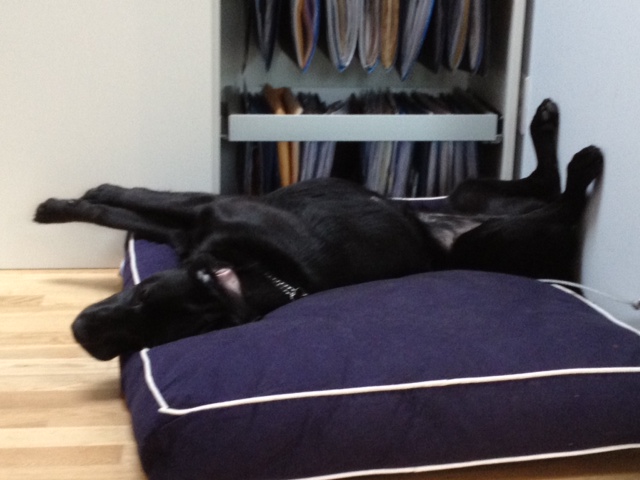
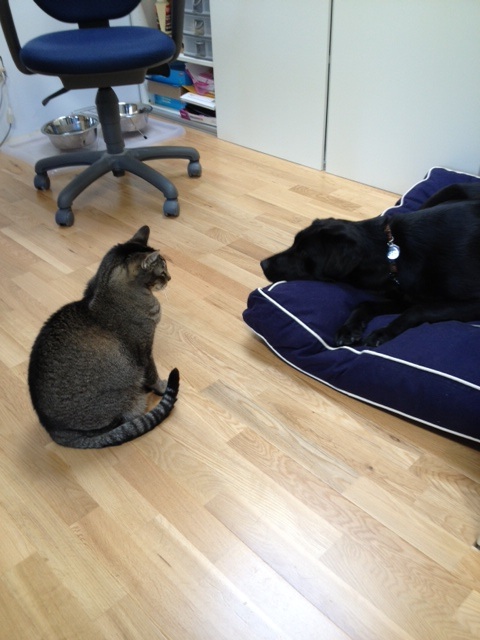
Yakira – photo by Lisa Thompson

This week has been one of lasts. The last walk around the neighborhood with Yakira. The last puppy class. The last time to the local grocery store. The last time to work with Bill. The last time to go to church. Last sleepover. Last time having a lunch date with Bill.Then there are all the lasts that I didn’t realize were lasts when we did them. She has been so many places with us over the last year. Tomorrow marks one year since we first saw Yakira.

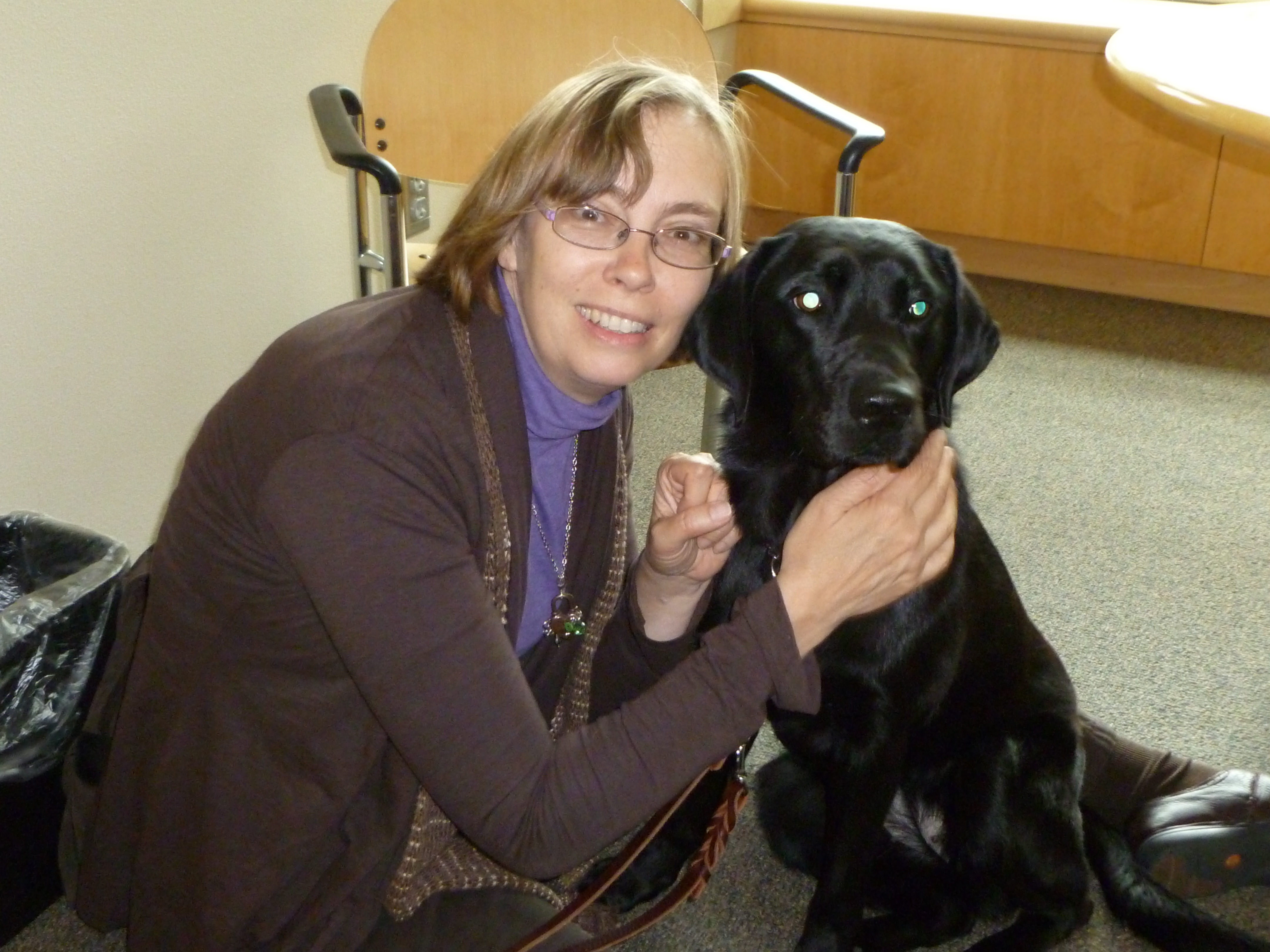
Yakira – October 13, 2011

Sometimes I get very sentimental and a bit sad but at the same time I’m excited to see what Yakira’s future will bring. We are having a farewell party for her on Sunday evening. Then we put her on the truck early Monday morning. This is all part of the puppy raising process. The good and the bad. So proud of the dog she has grown up to be. But also seeing her weaknesses and hoping that the change of environment and stress of this transition doesn’t bring out those weaknesses and make them a deal breaker. But also knowing that if they do, then being a breeder or a guide dog isn’t what is best for her future. So that is the last of the sappy stuff about Yakira being recalled to Guide Dogs for the Blind.

Retiring a Guide Dog

I think the hardest thing about having a guide dog is probably their retirement. The average guide dog works for about seven years, so most handlers have to go through this process several times in their lives. There are three basic reasons that a guide dog retires. The most common is age. Just like with people, dogs eventually get too old to do the work of a guide dog. For most dogs this is about 9 or 10 years old. Another reason for retiring a guide dog is health. Some dog develop health problems that make it difficult or impossible to work. The last reason is some dogs just decide they don’t want guide anymore and are ready for the more relaxed life of being a pet. This is sometime brought on by stress or a traumatic incident while working as a guide dog.

Whatever the reason for retiring a guide it is a difficult and painful process for the handler. Guide Dogs for the Blind has a blog set up for “remembering the people and dogs of Guide Dogs for the Blind.” Some of the most resent post include:

Marly: Gone But Not Forgotten (a tribute by Juliet Cody to her first guide dog)

One of the Greatest Guide Dog Retirement Jobs Ever! (the story of guide dog Leslie and the second career her family found for her when she had difficulty with retirement)

Mathew: The Dog with a Heart of Gold (this dog was retired early due to sever allergies)

Remembering Havarti (tender story of a very short career)

Thank You, Firestone (short poem)

I encourage you to take some time and read about the impact these amazing dogs have on the lives of those they come in contact with.

Guide Dog User Lifestyle

So what is it actually like to live with and use a guide dog? So for this weeks post in honor of National Service Dog Month I’ll try to answer that question. But since I have no personal experience I found a couple of videos produced by Guide Dogs for the Blind that give some ideas of what it is like.

I also found this podcast interview with Bea Hawkins, 93, on her eighth Guide Dog. Listen in to this delightful conversation with a truly charming lady who is thoroughly in love with her Guide Dog. (12 minutes.)

Bea Hawkins Interview

I’ve learned so much over the past few years of being a puppy raiser for Guide Dogs for the Blind about what it is like to have a guide dog but I still only have a glimmer of what it is like. Age related Macular Degeneration runs in my family so I could go blind in my old age. I hope that I will have the courage to learn orientation and mobility skills so that I could have a guide dog. I love the freedom and independence that a guide dog brings to it handler. That is why I’m a puppy raiser. I didn’t know that when I started raising. Then it was about being able to take my dog to places that pets can’t go. I still love that but it is more about being making a difference in the world in a positive way. I still love being able to take these puppies into all kinds of places. I also love getting to know each dog and enjoying their amazing personalities. But the real payback is the impact these dogs have on people’s lives.

Training With a New Guide Dog

I thought for my second post, in honor of National Service Dog month, I focus on what it is like to go to the school and get a new guide dog. Because the working time of a guide dogs is seven years on average, most guide dog users have several guide dogs in their life time. Each dog is different and the transition from a seasoned dog who knows just what you want to a young inexperienced dog is exciting but challenging too. It is also heart wrenching when I dog must be retired whether it is due to old age, health issues or behavior problems. It some ways the first time is the easiest because it is simpler but it also has the challenges of being a whole new experience.

There is an extensive application process and then once accepted the guide dog user has to wait for an available class date. For some handlers with special needs the wait is more for the right dog to be found and trained than an available spot in a training class. There are about a dozen guide dogs schools in the United States. Because I’m a puppy raiser for Guide Dogs for the Blind, I don’t know much about how the other schools work but I think they are similar in many ways.

Guide Dogs for the Blind has two and three-week classes. Interesting to note that they are phasing out the three-week classes. It is an intense training with a very low instructor to student ratio. This makes it possible to be flexible in fitting the needs of each team. Dog day is probably the most exciting day of training, where the handler finally gets to meet the dog that has been carefully picked to fit their needs and desires. Soon after they take their first walk together. Over the course of the class there are many ups and downs. The handlers have to learn/relearn the skills of handling their dog and his/her challenges. Here are two blogs from a recent three-week class at Guide Dogs for the Blind in San Rafael, California. It is a really good way to get a glimpse of what it is like to train with a new guide dog. It takes a lot of discipline to faithfully journal the daily experiences of training with a guide dog.

Six Feet Over

Blind Girl Blog

At the end of training is a formal graduation ceremony. This is when the puppy raisers and the handler meet. It is an exciting an emotional time. After the ceremony the guide dog user is then cleared to go out on their own without an instructor. But the training isn’t really finished. It typically takes 6 months to a year for a new guide dog team to be working smoothly and consistently together. When the two of them come together as a team it is an amazing relationship that both enjoy and the bond between the person and the dog is incredible.

National Service Dog Month

September in National Service Dog Month in the United States. So this month I thought I’d highlight guide dogs in my weekly puppy posts. This week I decided to start with how a little about training guide dogs. Guide Dogs for the Blind did a series of videos  a few years ago by following a trainer through San Fransisco. It shows one dog, Solana and some of what a training session is like.

This first video show the dogs loading up in the morning. It is the longest video and the least interesting in most ways. So if your pressed for time skip this one or if you really like the others come back to this one.

In this video show unloading the dogs from the training van, harnessing up and starting off down the street in San Fransisco.

This video features training on escalators and subway platforms.

In the last video you get to meet Solana’s partner on her graduation day.

My Guide Dog Song

I made up a song this week about the stages of life of a guide dog. It was inspired by and is sung to the tune of the “Gilwell Song”. We learned it this year while we were at Wood Badge, a leadership training put on by the Boy Scouts of America. We had a Wood Badge reunion this week and it got the song stuck in my head again. So I think this was an attempt by my brain to move on to something else. Here is a link to the tune. Gilwell Song. You can sing along if you are brave enough to try.

My Guide Dog Song

I’m just a little puppy, but a good old puppy too.

And when I’m finished growing, I wonder what I’ll do.

I love my puppy raisers, but there is so much more,

So I’m going to be a guide dog if I can.

Back for training, happy land, I’m going to be a guide dog if I can.

———

I used to be a puppy, and a good old puppy too.

But now I’ve finished growing, I wonder what I’ll do.

I love my puppy raisers, but there is so much more,

So I’m going to be a guide dog if I can.

Back for training, happy land, I’m going to be a guide dog if I can.

———

At last I am a guide dog, and a good old guide dog too,

But now that I am guiding, I have so much to do.

I am not old or feeble, so I can guide some more.

And I’m going to help my handler if I can.

I am guiding, happy land, I’m going to help my handler if I can.

———

I used to be a guide dog, and a good old guide dog too,

But now I’m finished guiding, I don’t know what to do.

I’m growing old and feeble, and I can guide no more.

So I’m going to take a nap if I can.

Back to sleeping, happy land, I’m going to take a nap if I can.

———

Zodiac is so funny. When I start singing this song he gets all excited. He runs up to me and usually jumps on me too. I just can’t help but feel happy when I sing about my pups and he is very attracted to happiness and anything that might be fun.

Do you ever make up new words to songs or with your own tune and lyrics? I did one once while I was walking Casey when she was young. But I didn’t write it down and most of it has been forgotten.

Guide Dogs for the Blind Jargon

A few months ago there was a really fun blog post about the jargon that goes along with puppy raising and training guide dogs. It was originally posted here on No Bones About It: The only official blog of Guide Dogs for the Blind but I thought it might be helpful for those who are following the progress of my puppies but are not directly involved with GDB. I hope you enjoy this.

Jargon, Jargon!

By Steve Grunow
Dog Placement Coordinator

Like many organizations, Guide Dogs for the Blind has a culture and jargon of its own, especially when talking about the dogs. Out in the kennel complex the eyebrows of the uninitiated might be raised when overhearing bits of conversations like the ones that follow. The “Guide Dog Speak” words and phrases (in bold font) are defined at the end of the sample conversations.

Veterinarian: “This Lab, Buddy, has (1) hips to die for, but his (2) ears are really ugly. I’m hoping for a (3) good bite when I open his mouth. Today is his birthday; hopefully we’ll have time to (4) shoot him later.

Instructor: “Gee, I don’t know about that new dog. When he gets (5) jacked up he can be pretty (6) rampy. He acts like he thinks he’s here (7) on a date. On top of that he is a (8) CF5, and he can be kind of (9) sharky in (10) CR.

Kennel Staff person: “I can’t come to that meeting right now. I’m right in the middle of a (11) whelp”.

Instructor: “Watson had an (12) experienced raiser who should have known how to feed him right, but Watson had to be kept on on (13) sawdust and peanut shells for a while after he was (14) recalled.”

Instructor: “Zeus is (15) a lotta dog. He’s (16) loaded on the clicker but he still (17) plays keepaway. He’s (18) high end and a little (19) mouthy. He has a problem with the (20) layover. He seems (21) to have his own agenda. And he isn’t very (22) responsible. He’s (23) from the outside. Those other (24) N dogs on his (25) string are like that, too. Some independence seems to be (26) in that pedigree. He does some (27) keying on (28) workouts. Maybe we’ll put him on the (29) food protocol for attentiveness. “

Instructor, in response: “That’s too bad; I (30) dropped him this morning before eye exams and he was an angel about it. I think that he’s scheduled to be (31) cut next week and maybe he’ll have a better (32) work ethic a while after that. “

Instructor: “Flora is a pretty (33) honest but I don’t know how (34) sound she is.”

Kennel Staff person: “Trapper is (35) in the dryer on low. He’ll be done in about half an hour.”

Instructor: “Daisy’s stools today were just (36) beautiful today! We still have to get rid of her (37) happy tail before we can do much with her, though. And Daisy is still a (38) garbage mouth – and her (39) roommate drives me crazy when he keeps (40) finger painting in their run.

Instructor, in response: “I know what you mean. And Daisy has also been (41) tanking a lot lately, too.”

Breeding tech: “Harvey is still (42) intact. We’ll need a couple of (43) straws because we’re going to (44) collect him a couple of times this week if we can. Harvey (45) loves his job but he doesn’t seem to do well when he’s been (46) frozen.”

Instructor: “Mikey is such a (47) smooshy marshmallow! Any unusual thing happens and he immediately becomes (48) wet mouth.

Instructor: “Darn! Spike is finally (49) bombproof and now we have (50) to pass him back!

Instructor: “Tulip keeps going to (51) hot spots and she’s so active that last week we had to (52) musher’s wax her.

One puppy raiser to another: “I (53) started that puppy. But somebody else will have to (54) finish him off. He still does lot of (55) counter surfing. He can also be a little (56) doggy. He’ll be my first (57) transfer puppy.

Instructor: “When Fred first began training, he had a really bad (58) recall. So we did a lot of (59) FIR’s with him and now he’s almost a (60) Velcro dog.

Instructor to apprentice: “Some challenging dogs do a lot better in a (61) GL.”

DEFINITIONS
1. Has hip X rays showing that the head of the femur fits firmly into the socket in the pelvis, indicating that there is almost no chance that the dog would have hip dysplasia

2. Dirty, infected, needing treatment (common in many floppy-eared dogs)

3. Teeth straight and regular with the top incisors just overlapping the bottom incisors (as opposed to an overbite, an underbite, or a wry – crooked – bite in which the teeth are not positioned properly)

4. Give the dog injections/ vaccinations

5. Excited/ aroused

6. Rowdy/ impulsive

7. To be bred

8. The most challenging “type” of dog to handle and control on  a “control factor” scale (of 1 to 5) which assesses a dog’s activity level, physical toughness, distractibility level, and assertiveness, in order to later help select an appropriate handler to match with that dog

9. Plays roughly, “dominantly,”  often nipping at the neck area of other dogs

10. Community run (periods of time when groups of dogs run together for exercise and for their interactions with other dogs to be evaluated)

11. A mother dog’s act of giving birth (“whelp” can also refer to a puppy, or “to whelp” means for a dog to give birth)

12. A puppy raising volunteer who has raised at least one previous puppy for Guide Dogs

13. Diet/weight loss dog food

14. In this context, returned from its puppy raiser home to one of the Guide Dogs campuses to begin formal guide training, usually after having spent about a year in the  puppy raising home

15. Big, strong, active, assertive

16. Has received treats paired with hearing clicks from a hand-held training clicker enough times that the dog has learned that the click indicates that a treat is forthcoming/ the dog has learned that a click from the instructor indicates that the dog is performing the appropriate behavior

17. In the context here meaning that the dog doesn’t come when he’s called; instead, runs and tries to get people to chase (undesirable behavior in a working Guide Dog)

18. Very active, assertive, often inattentive, challenging to restrain or control

19. Puts mouth (not biting down) on people or on other dogs, sometimes in play, sometimes in excitement or greeting, sometimes in protest of what that the person is doing or directing the dog to do (not desirable in a Guide Dog)

20. Having the dog lie down and gently rolling the dog over onto its side, for example to check the dog’s abdomen

21. To be independent, inattentive, friendly but not very eager to please

22. Capable of continuing to following commands/working without needing moment-to-moment observation/supervision by its handler; seeming to enjoy doing its job

23. Purchased or donated – not from Guide Dogs’ own breeding stock dogs

24. Each litter of puppies is assigned a letter of the alphabet and all the pups in that litter are given names that start with that letter (so dogs which have names starting with the same letter and which are at Guide Dogs at the same time, are often litter siblings)

25. Group of dogs assigned to an instructor/team

26. Pedigree = family tree; so meaning a trait(s) that are evident in other dogs of the same lineage, so those characteristics are often  assumed to be highly influenced by the dog’s genetics

27. Staring tensely at something or someone in the environment with which the dog is apparently uncomfortable (undesirable in a Guide Dog)

28. Training sessions

29. A structured plan for rewarding a dog with food treats when the dog is paying attention to the handler

30. Put eye drops into the dog’s eyes

31. Spayed or neutered

32. Be more attentive, less distractible, more focused on work

33. An eager-to-please dog that tries hard to do as directed (if the dog makes mistakes it is usually due to the dog’s not understanding what is expected, or being afraid or unable to follow directions – as opposed to being overtly ”disobedient”)

34.  Confident, outgoing, unlikely to panic in new situations

35. In a crate in the bathing room with a blow dryer aimed at the dog in the crate to dry the dog after a bath

36. Normal, solid, well formed, usually said of a dog which had previously been having  diarrhea

37. When a dog’s tail gets sore from the dog wagging its hard against the bars or the walls of a kennel run

38. Serious scavenger, loves to “vacuum” the floor or the ground for food or other items which are interesting to chew (not desirable in a working Guide Dog)

39. When two dogs are paired in a kennel together

40. Stepping in feces then tracking it around the dog’s kennel run

41. Drinking a lot of water (can be related to boredom, stress, or a potential medical problem)

42. Unspayed or unneutered, an animal capable of breeding

43. Containers in which semen can be stored to do artificial inseminations

44. To get semen from a male dog, often to be frozen to be used for later artificial inseminations

45. Breeds easily and readily and without much human assistance (surprisingly to some people, some dogs do not seem much interested in breeding)

46. When previously frozen sperm from this dog is thawed and used for artificial insemination, the conception rate is often low

47. A temperamentally “soft” dog, sweet, easy to handle, affectionate, loves being touched

48. Drools, often as a result of stress (not desirable in a working Guide Dog)

49. Outgoing, confident, able to handle any situation that might come up (very desirable in a Guide Dog)

50. A new Guide Dog is fully trained, but there currently isn’t a suitable student in class that seems like a good match for that dog, so the dog needs to remain in the kennel until the next class begins

51.  Skin sores that can begin with a small irritation and then get steadily worse if the dog chews or scratched at the sites

52. Put a product designed for sled dogs on the bottoms of the dog’s feet to keep the feet from being irritated by running on concrete

53. The raiser who began to raise that puppy immediately after it came from Guide Dogs, usually at about 8 weeks old

54. To keep, train, and socialize a puppy until it is old enough to be returned to Guide Dogs to begin formal guidework training (usually at about 15 months of age)

55. Putting front feet on counters to see what is available, and maybe to steal off the counter if the opportunity  presents itself – common in dogs (not desirable in a Guide Dog)

56. Extremely interested in other dogs, sometimes in a way that involves attempts to bully,  dominate or threaten the other dogs

57. A puppy which goes from one volunteer puppy raiser’s home to another raiser’s home until it is old enough to begin its formal training at Guide Dogs; sometimes transfers are pre-planned; sometimes dependent on circumstances

58. In this context, the act of a dog coming to its handler when the dog is called

59. Food induced recalls (rewarding the dog with a bit of food when the dog comes when called)

60. A dog that voluntarily often sticks close to its handler – often a needy, less secure, more demanding type of dog

61. A Gentle Leader (like a halter on a horse, used often to make dogs easier to manage and walk)

Zodiac’s Littermates

Pomona with Zulu, Zodiac and Zenith

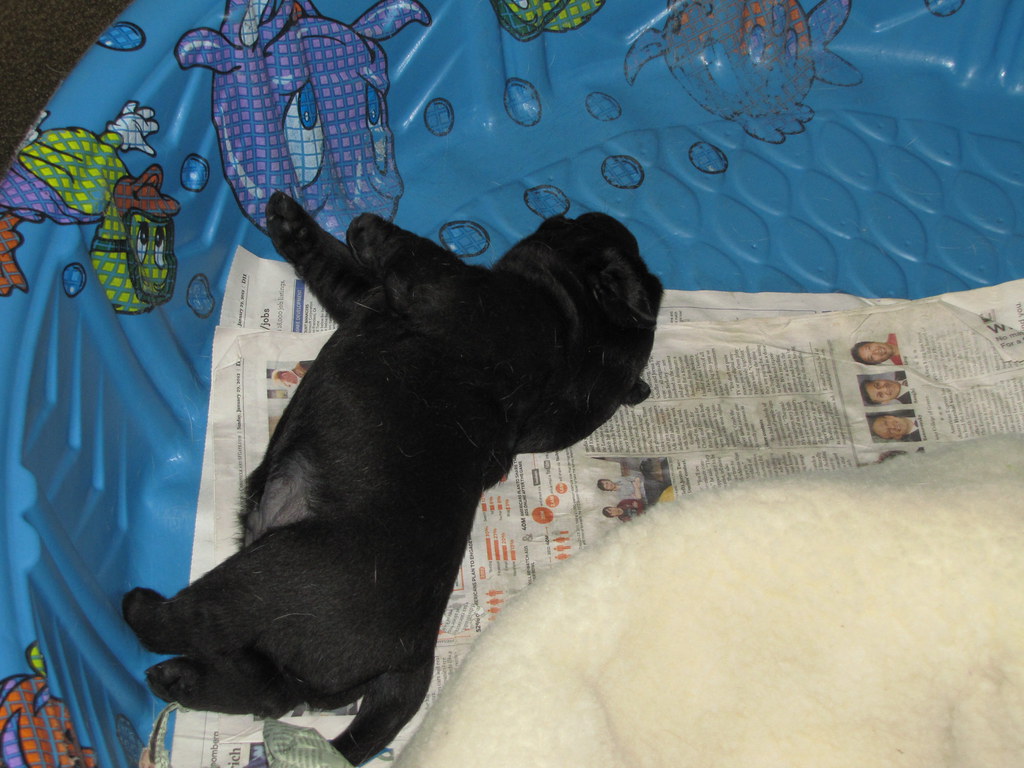
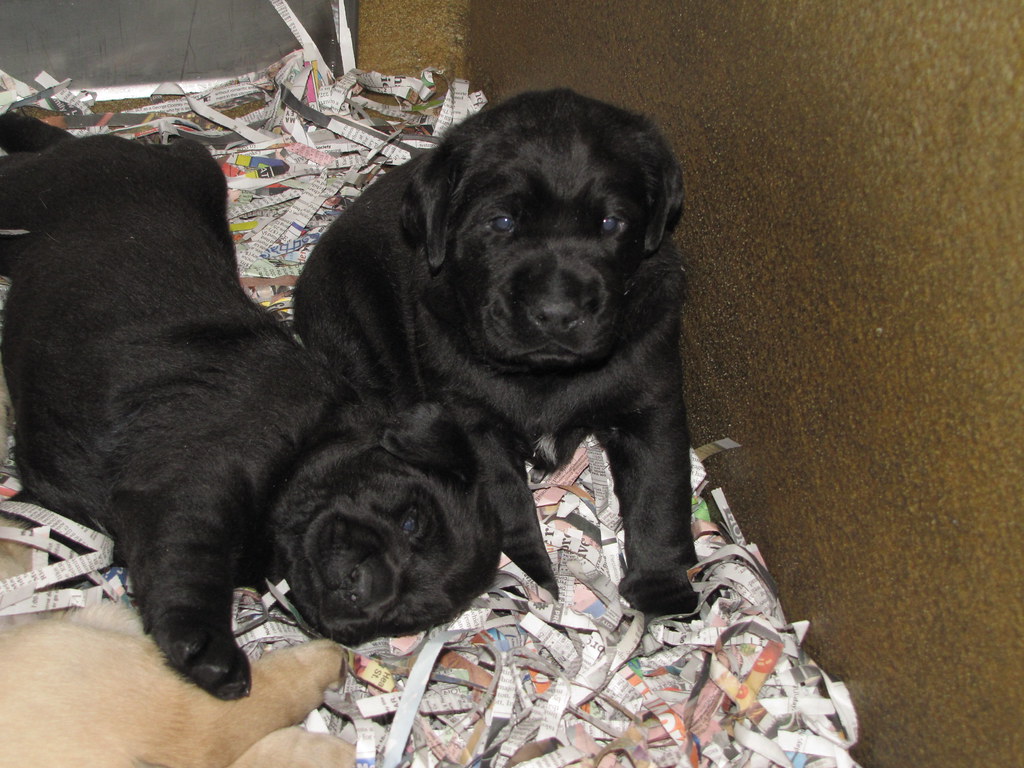
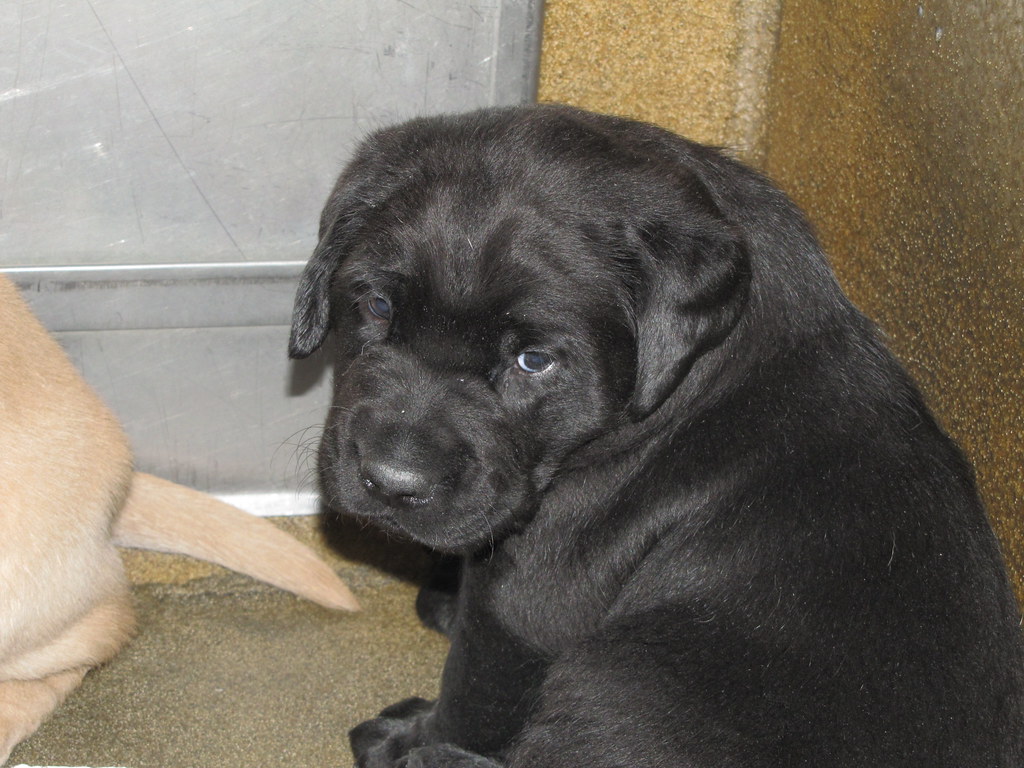
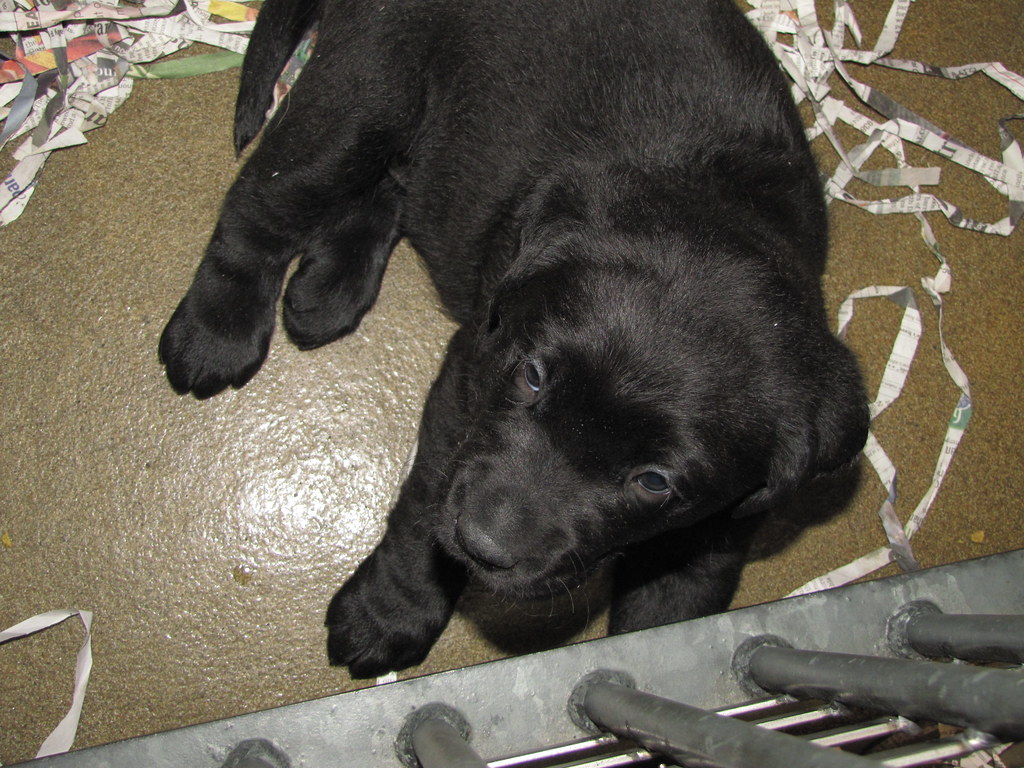
One of the things that Guide Dogs for the Blind does for puppy raisers is the littermate photos. With each litter of puppies they take photos and a couple of videos when they are a week or so old and then again a couple of weeks after that. With Yakira they had the photos uploaded to their Flickr site before we got Yakira but Zodiac’s litter was posted not long ago. Today I finally had a chance to go and look them up. I was also able to look up the names of his siblings in this year’s Fun Day book. The yellow lab in these photos is Zodiac’s sister Zulu and the other black lab is his brother Zenith. Sometimes I think I can tell which one is Zodiac but I don’t think there is a way to be sure. Correction on that, as I was just looking closer at these photo I realized that Zenith must be the one with a small white spot on his chest. Zodiac doesn’t have a white spot. Yeah! I’m really excited that at least in some of the photos I know which one is Zodiac. Anyway, I enjoy seeing how they looked when they were just tiny little things.

March 13, 2012 Video (Zodiac is the one hidden under the newspaper)

March 27, 2012 Video (zodiac is the black one not moving around much)

Zodiac

Zodiac and Zenith

Zodiac or Zenith

Zodiac or Zenith


Update on Casey

Casey asleep on her new pillow

Casey is getting all settled into her new home as you can see from the photo above. I got an e-mail from Carrie earlier this week and here is some of what she said.

We have settled in nicely. Our plane trip home went smoothly. I even had to wake her up after the landing both times because she was sawing it off! I had a job interview first thing Monday morning, and she helped me win over the employer as I got the job (just a small part-time contract). She did great on our first day at the office last Thursday.

We are working on the cat-dog relations slowly but Sammy is coming around. Casey keeps showing Sammy how cute and playful she is but he is not quite convinced yet. We have done several long walks around my neighborhood towards the ocean and back. We’ve also gone to the pool where I swim 3 x per week and she was great on the pool deck. There are LOTS of dog distractions in my area – it is a very popular dog walking region, so we are working on that, plus trying to educate dog owners to keep moving past us as we don’t want to do the meet and greet while she’s working….

I gave her a day off today as it’s been a long week. We’re back at it this week with several appointments, bus rides, a trip to the vet to weigh her, etc. While I’m still tired and figuring out the routine, I am so thrilled to have her in my life – it is a huge difference, and I get so many smiles from the public!

Casey making friends with Sammy

It makes my day when ever I get e-mail from one of our pups and with photos it is even better. I’m so happy with the wonderful handlers for each of our first three pups.

Casey’s Graduation

Carrie and Casey outside Boccelli’s

Today Casey officially became a guide dog for her new partner Carrie. Guide Dogs for the Blind has an official graduation where the puppy raisers symbolically hands off the puppy they raised to their new handler. Before the ceremony we have an hour or so where we get to meet our puppy’s handler and see our pup that we haven’t seen since they got on the truck to return to GDB for formal harness training.

We arrived at GDB Boring, Oregon campus at 11:45 a.m. The rest of the puppy raisers where already there. Then the group went over to the dorm building. There we were taken to different areas around the building to wait for our puppy and their partner to be brought to us. Bill went off to find a bathroom and missed Casey and Carrie when they first come out. I saw them coming down the long hallway. It was so much fun to see her again. She didn’t seem much changed and was so happy to see me. She was just getting settled down when Bill came up and she practically jumped into his arms. We spent the next hour or so chatting and cuddling and petting Casey. Casey did the typical thing of rotating around between the three of us while keeping track of her training, Amy.

Me and Casey

We gave Carrie, Casey’s “Go to Bed Blanket” that I made her while she was a puppy and a couple of basic nylabones for Casey’s birthday which was last week. He handler gave us a delicious box of chocolates from Victoria. Carrie just finished her 2nd year of law school. She is thinking of becoming a law professor but hasn’t decided for sure. She lives in a small apartment in Victoria, BC with her husband and a cat. Casey is her first guide and she said there are 20 other GDB graduates on Vancouver Island. Her and Casey and a very good match, of course. Guide Dogs for the Blind is amazing at that.

Casey and Bill

We went out to eat after graduation to an Italian place in Gresham called Boccelli’s. It was a nice place to relax and get to know Carrie better. Casey and Carrie had an early trip to the airport in the morning so we took them back to campus after dinner. It was so much fun to see Casey again. She was her normal wiggly waggly self we she saw us and we enjoyed giving her lots of loves while we got to know Carrie. I’m sure that the two of them will quickly develop into an incredible team.

Casey by Carrie’s feet at dinner