23 May 1856 – Cast off from Liverpool – Mary Taylor

From the Diary of Samuel Openshaw:

May 23 – About two o’clock we were tugged out into the river. The rain poured down pretty freely.

From the Journal of Henry Hamilton:

Friday, 23rd – I commenced to work in the galley. This morning got the fire started &c but it was very smoky. I was over with just as if I had been the funnel myself. We sailed out of the docks.

From the Journal of Joseph Beecroft:

Friday 23rd The day appointed for our sailing. I arose about 4. The seamen were early at work getting the vessel out of dock. At about half past 9, we were getting into the river and before noon we were at anchor opposite Liverpool. We enjoyed ourselves here in getting our food and in passing up and down deck looking at one another and the different vessels that crossed the river. Retired early to rest.

Letter from James and Elizabeth Bleake:

Ship Horizon Liverpool

May 23rd/56

Dear Father and Mother:

We have arrived safely and are all well so far. We have a very comfortable place on board and go out of dock today. Liverpool is the dirtiest place we ever saw. London is exceedingly clean in comparison.[p. 1]

Provisions on board are of first rate quality and plenty for us but we have 15 pounds of Indian meal, 10 pounds of flour, 4 quarter loaves and cheese, raisins, spice, etc. etc. besides. So we have not faith to starve.

Remember us kindly to all inquirers. Farewell and may God our Father bless you both is the earnest [p.2] prayer of your son and daughter, James and Elizabeth Bleak [Bleake]. [p.3]

From Life History of John Jaques:

Fri. 23: About midday moved out of dock into the river. Fine morning . Stiff breeze. Soon after this a little belligerent display occurred between the mates and some of the crew. I did not see the commencement of the affair, but I learned that some of the crew had demurred to obeying orders, and a regular fist cuffing took place. Two or three bloody faces figured in the scene. I was on deck in time to witness a little not very civil jaw between the first mate and one or two of the crew. The mate paced the deck flourishing a Colt’s revolver, and swearing and threatening grandly but did not use the weapon. If necessary use them, and over with it. Threatening and bragging are the business of bullies. Several of the crew were sent ashore, and other men came on board in their place. The mate complained of the refractory ones that they were a set of “blacklegs,” and that they came on board to plunder the passengers and the rest of the crew. They charged him being drunk and “no man.” Meat, peas, biscuits, flour, oatmeal, sugar and tea were served out today.
21 May 1856 – Boarding the Horizon – Mary Taylor

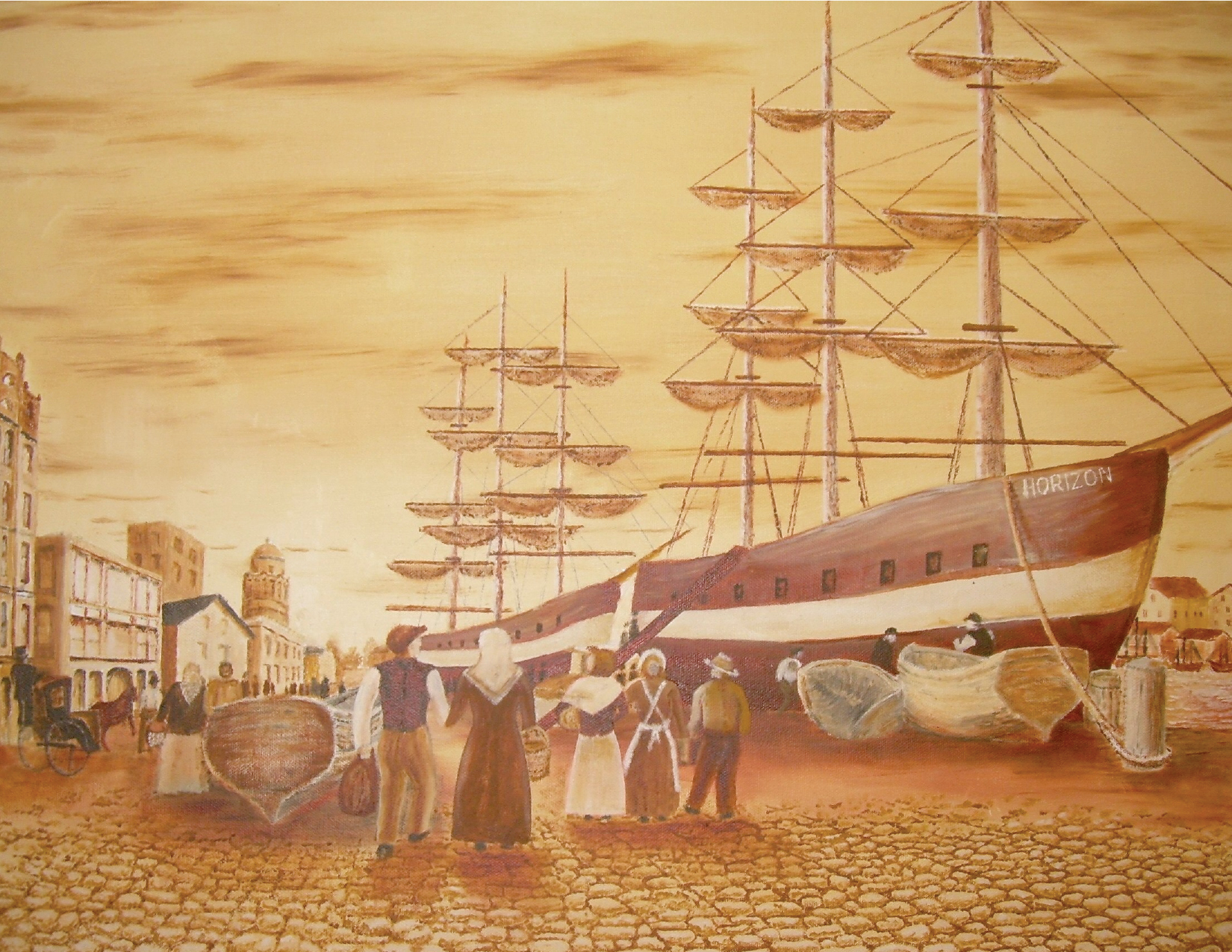
The Horizon by Kenneth L. Rasmussen

On May 21st and 22nd 1856 the passengers boarded the Horizon in preparation for sailing to Boston Harbor. This included my great-great-grandmother Mary Taylor, her husband, William Upton, her parents and an aunt. I’ll be posting info about her journey for the next 5 months.

From the Journal of Henry Hamilton:

Wednesday, May 21st – Landed at 11 a.m. As soon as we got upon the pier, there was men, lots of them that come to us, we’ll take your things &c &c. Aren’t you some of the brethren? What brethren say I. So they told me they would go on that way to get [-] boxes to carry. I & Joseph then went to see about the porter that Pastor Parks told us about, but could not find him. We returned to the boat, saw a Brother Jessie [Jesse] Haven. We then got a porter to take our chests off to the Horizon, the vessel that we was to go with. We then went & had some dinner & went to the office to see about our going away. We got that settled that I was to go as passenger cook. So we went & got mattresses bought &c. Slept on board the vessel all night.

From the Journal of Joseph Beecroft:

Wed. 22nd [May 21, 1856] We arose soon and I wrote and after breakfast we got our luggage [to] our office in Islington Street and got names signed to the ship and then the luggage to the ship in Bramley Moore Dock and our tickets for our certificates. [At] night I got my certificate for my birth and had a walk in Liverpool, retired to bed.

We came on board in the afternoon and of all the sights that I ever saw, it was the most astonishing. Luggage was piled on a piece of ground in front of the ship to a considerable, and hundreds were busy in getting in their [p.8] luggage. And about half past 10 or 11 I went to bed , where my wife and son already were, but I did not sleep until the noise of talking and laughing had subsided. I then slept better than I had done for some time and awoke refreshed in body and mind, grateful to my Father in Heaven for his blessings and favors.

From the Life History of John Jaques:

Thurs. 22: About 7 o’clock I sent my wife, her sister, Tamar, and my daughter, Flora, in a cab to the Horizon, 2/6. I went with our luggage in the cart 4/, and 6 demies to the man. Got Brother Thomas Dodd to assist me in getting our things on board. Paid him 1/0. We engaged berth number 401 for myself and wife, and the half of number 400 for her sister, Tamar, both on the second or lower deck. Ann Johnson, servant of Brother Linforth was to have the other half of 400. Brother W. Paul and wife engaged the berth next to mine. Brother William Taylor and wife from Stratfordshire had engaged one next to theirs. We did not get out of dock this day. The ship had 856 passengers on board, 635 of whom were P.[Perpetual] E.[Emigrant] Fund emigrants, 212 ordinary , and 7 cabin passengers. Elder Edward Martin, president of the company, assisted by Elder Jesse W. Haven and George P. Waugh; steward, John Thompson; cook, Henry Hamilton and Joseph Jackson; historian, myself; sergeant of the guard, Elder F.C. Robinson. We made our beds of our spare clothing, bought a pound of molasses 3 demies, a pound of marine soap 6 demies, some round lamp wick, six one penny packets of violet powder, and six one penny boxes of wax lights and six red herrings.

More info on the Horizon: Liverpool to Boston.

My Generations Project – Mary Taylor

Mary Taylor

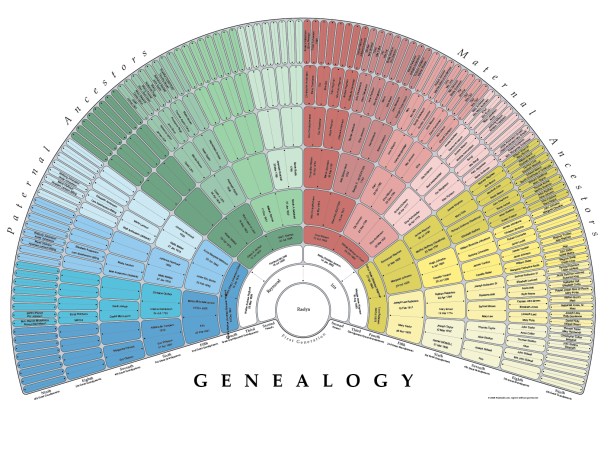
The next step in My Generations Project as out lined by The Generations Project episode “Do Your Own Generations project”, is to populate my family tree. So I went to FamilySearch.org on the right hand side of the page is a link for “just getting started”. If you don’t have an account you can set one up there. Step one is to build your tree. Mine was already built so I went to the second step. Discover your fan chart. If you have an account for FamilySearch you can go straight to CreateFan.com and login there. Then just select create and it will create a pdf file ready to save to your computer or send it to one of four printing options.   It was really slick and easy. Here is how mine turned out.

There are several free downloadable genealogy charts through TreeSeek.com. One of the other options there is a cloud style tree. I picked the one that is just last names. Here is how mine came out.

As I explored TreeSeek.com I found a link on their about page to Misbach Enterprises. They have blank pedigree charts and some are free that you can download. One is a graphical family tree that looks interesting. A few weeks ago I found a bunch of blank free pedigree chart at ObituariesHelp.org. I really like an 8 generation fan chart that I have used for my puppies pedigrees.

family_tree        fan_chart         eight_generation_family_charts_fan_triangles

There aren’t too many blanks spots on my mom’s side of the family. My dad’s side has a lot more holes. Maybe sometime I’ll work on filling in those holes but I don’t see it happening anytime soon. I really like how compact and clear the fan charts are in organizing so much information.Have you used a fan chart?

My Generations Project – Mary Taylor

Mary Taylor

I’m in the middle of my first Generation Project. I am focusing on my great-great-grandmother, Mary Taylor.The first step of a Generation Project is to find your why. Here are the questions that the producers of The Generations Project have:

  • What do you spend a lot of time thinking about?
  • What do you hope will happen to you in the next year or two?
  • Tell us a story about a life changing experience.
  • What is the biggest challenge you’re facing in your life now?

As I’ve worked thought these question and pondered I’ve decided that the challenge I want/need the most help with now is with the Telling Family Tales web site. I really want this blog to be meaningful. I have a vision of it being a place where all or at least most of the resources that someone wanting to record and keep family stories can come to learn what they need to complete their project. This feels like an overwhelming tasks and I don’t know if I can do it. But I want to. I’ve wanted to do something to help others be more effective in telling their family stories for many years. Then a few months ago the idea of a gathering place of not just what I have done but others information too developed in my mind and that seemed to make so much sense.This idea will take a long time to really develop and I worry if I have what it takes to make it a reality. I’ve taken a few small steps, but for me starting is the easy part. I have much more trouble with staying on task and completing a project.

My great-great-grandmother survived through some really tough stuff and found ways to thrive. I want to find that same kind of strength in me. So there is my why. I’ll post about step two – populate your tree next week.

In the meantime as part of my upcoming Martin’s Cove experience I started sending out emails to those in my family who coming about important dates along Mary’s journey from England to Salt Lake City. I’m going to a series of short posts called 156 years ago today to go along with those emails. I hope you enjoy them.

What are your biggest challenges? Are you thinking about doing a Generations Project too?

156 Years Ago Today: 30 April 1856

On April 30th 1856, word came to Mary Taylor and her family that in 21 days they would be sailing to America. It must have been so exciting and scary to have a sailing date for a trip they had dreamed about taking for years. A trip that would take many months to complete. A trip full of many dangers and hardship under the best of conditions.

This is the first of a series of posts about the milestones of Mary’s journey.

Mary – what we have so far

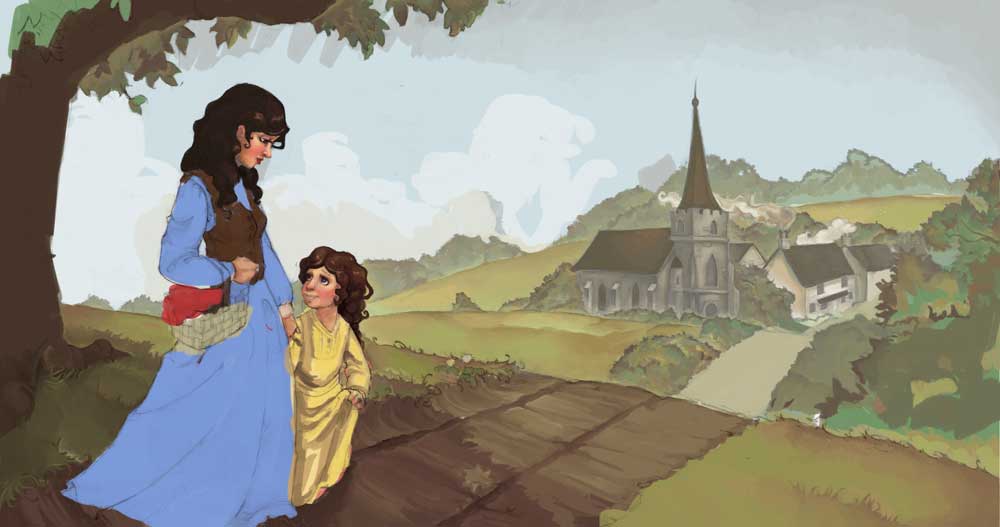
in process illustration by Kimberli Johnson of Mary and her mother

I’m so excited about this project! The goal of this project is to tell the story of my great-great-grandmother, Mary Taylor and her journey to Utah and do it in a way that is appealing to children of all ages. She was born in England and joined the Martin Handcart Company traveling to Utah in 1856. The fun part of this is that it will be a children’s book with about 30 illustrations. My niece, Kimberli is a talented young illustrator and she has agreed to take on this project.

The scary part of this project is that it looks like I might have to do the writing. I don’t consider myself a writer so this is a stretch for me. I’m hoping that someone will come along who is excited about the book and want to take on the author role. In the mean time it is up to me to move things forward.

Not a lot to show for it yet but the pieces are in place and they will move forward as life let them. We are planning a small square book that we will have printed by blurb. Kim and I have worked up an outline, starting with some ideas that her dad took from reading a history about Mary’s life. And you can see what she has done so far on in the illustration above. Here is an outline of what the book will cover and the illustrations or each spread or page.

  • Illustration #1 cover (Mary)
  • Illustration #2-page 1- title page
  • Illustration #3-pages 2 & 3- Mary Taylor born in England and in small village of Coton-in-the-Elms, that means cottage in the Elms. (image of Mary, her mother & village)
  • Illustration #4 –pages 4 & 5 – When Mary was little her parents, Joseph and Harriet, heard the missionaries tell about Jesus and Heavenly Father’s visit to the prophet Joseph Smith. Her family read about Jesus in the Book of Mormon and all were baptized. (baptism)
  • Illustration #5 – pages 6 & 7 – Mary learns how to sew dresses and marries William Upton They all wanted to go to Zion in America to receive temple blessings, be with the saints, and hear the prophet. The prophet, Brigham Young, had a plan to help Mormons, like Mary, go to Zion for less money. They would pull handcarts, instead of needing horses or oxen to pull wagons. (wedding)
  • Illustration #6 – pages 8 & 9 – In 1856 Mary and her family sailed with other Mormons on the ship Horizon from Liverpool, England to Boston, in America. Some days the seas were rough, making all 856 people seasick, including an old woman who lost her false teeth when she heaved over the ship’s railing. (Horizon)
  • Illustration #7 – page 10 & 11 – Near America, the ship was surrounded by thick fog, because the saints prayed the fog parted just in time for the ship to avoid an iceberg and then the fog surrounded the ship again. (Fog)
  • Illustration #8 – pages 12 & 13 –  From Boston to Iowa City, Mary’s family road in train cars used for cows. When the train stopped one night a mob of angry men surrounded the sleeping Mormons and threatened them but the Lord blessed them so the mob left without hurting anyone. In Cleveland they helped put out a fire. (Train)
  • Illustration #9 – page 14 & 15 –  The weather was hot when Mary’s family loaded a wooden handcart to pull and push across the plains from Iowa to the saints in Zion. They slept in round tents with their feet toward the middle and cooked over fires. (Tents & Camp)
  • Illustration #10 – pages 16 & 17 –  Mary walked all day pushing and pulling a handcart with her mother, father, husband and cousin in the Martin Handcart Company. One day, Indians rode by the handcarts. The Indians did not hurt the pioneers. (Indians & Trail)
  • Illustration #11 – pages 18 & 19 – At Winter Quarters in Nebraska, the pioneers rested for a few days, bought more food, fixed handcarts, and the children swam in the river. (Winter Quarters)
  • Illustration #12 – pages 20 & 21 – It was a long hard journey and Mary would sing the handcart song to help her continue on the long journey, day after day. The pioneers were running out of food. Elder Willard Richards, an apostle, rode ahead to tell the prophet that the pioneers needed help and more food. All the pioneers prayed every day. (Singing & Willard Richards)
  • Illustration #13 – pages 22 & 23 –  Near fort Laramie, more Indians visited Mary and the pioneers. The Indian children shared candied fruit with the pioneer children. At the fort they hoped to buy more food and clothes, but they had sold all the food. (Fort Laramie & Indians)
  • Illustration #14 – pages 24 & 25 – One day as they crossed the Platte River it started to snow hard and it was very cold. Mary and the pioneers had to wade across the river. It was so cold there was ice floating in the river. (Platte River)
  • Illustration #15 – pages 26 & 27 –  When Elder Richards got to Salt Lake City it told the prophet, Brigham Young that Mary and the other pioneers needed food and help. The prophet told the men to gather food and wagons to go save the pioneers and he ended church early. (Brigham Young)
  • Illustration #16 – pages 28 & 29 – Burt Simmons already had a stout carriage full of food. He was ready and left to save the pioneers before the other wagons. (Burt Simmons)
  • Illustration #17 – pages 30 & 31 –  Mary Taylor was very hungry and cold. None of the pioneers had enough food. Some of them died, including Mary’s Father, Mother and her husband. (Death)
  • Illustration #18 – pages 32 & 33 – They stopped for several days to wait for the storm to end in a place now called Martin’s Cove. Burt Simmons and the rescue wagons found Mary and saved the Martin Handcart pioneers. (Martin’s Cove & Rescue)
  • Illustration #19 – pages 34 & 35 – Burt Simmons took Mary home where is wife nursed Mary back to health. (in bed)
  • Illustration #20 – pages 36 & 37 – Later Mary married in the temple and had nine children. She taught them about Jesus and Heavenly Father. (temple & children)
  • Illustration #21 – pages 38 & 39 –  (Mary & Irene sitting between Mary’s knees playing with a doll)
  • Illustration #22 – page 40 – Because Mary joined the saints in Zion, her great, great, grandchildren learn about Jesus in the Book of Mormon and follow the prophet. (posterity – single page)
  • Illustration #33 – back cover (this might actually be part of the front cover Illustration that just wraps around to the back cover)

I’ll post updates as this project moves forward. I can’t wait to see how it develops. Do you have any dream projects like this, that you have done or hope to do?

How To: Martin’s Cove Journal

After getting an idea of what I wanted to do with the Martin’s Cove Journal, I was ready to get started. One of the things that I have found that it works best when using InDesign on a project like this is to start with a master page. Since this is a simple book I only did one master page (2 page spread) but on more complex projects there will be more master pages. Since I knew that I wanted a side bar on the left for a time line I first put a guide at 2 inches. Next I put a second guide at 2.25 inches to help me with spacing for the second text box on this page. On the right hand page of the master I made a series of lines as journaling guides. These line are just .25 points think and to make them even more subtle the stroke is a tint of 30% black.

left-hand page - Martin's Cove Journal

From here I applied the master page to most of the pages of the journal. Next I decided to pick the fonts for the project. I wanted a font that would help to create the mood of old pioneer and 1856 so I did a google search and found Fontscape’s typeface directory. They have fonts by period, so I looked at Victorian (1850 to 1890) but they didn’t seem right. Then I looked at Wild West (1850-1900). I decided on Birch which I liked plus I had on my computer too. I used Birch to do the time line but felt that the text of excerpt from Mary Taylor’s history would be better in something more like handwriting. We don’t have any journals from Mary Taylor but I wanted these entries to give that more intimate impression. After searching though my script fonts I settled on Rage Italic.

right-hand page - Martin's Cove Journal

When I got text placed into the time line and the excerpt I thought that the left page needed something to separate these two text boxes. So I went back to the master pages and added a line and adjusted the guides to accommodate the change. At this point I also added lines across the top of both pages and one across the bottom of the right hand page. While I was on the master pages I put in page numbers. At this point the journal is really started to take shape but it seems too sterile.

black swirl

splotch

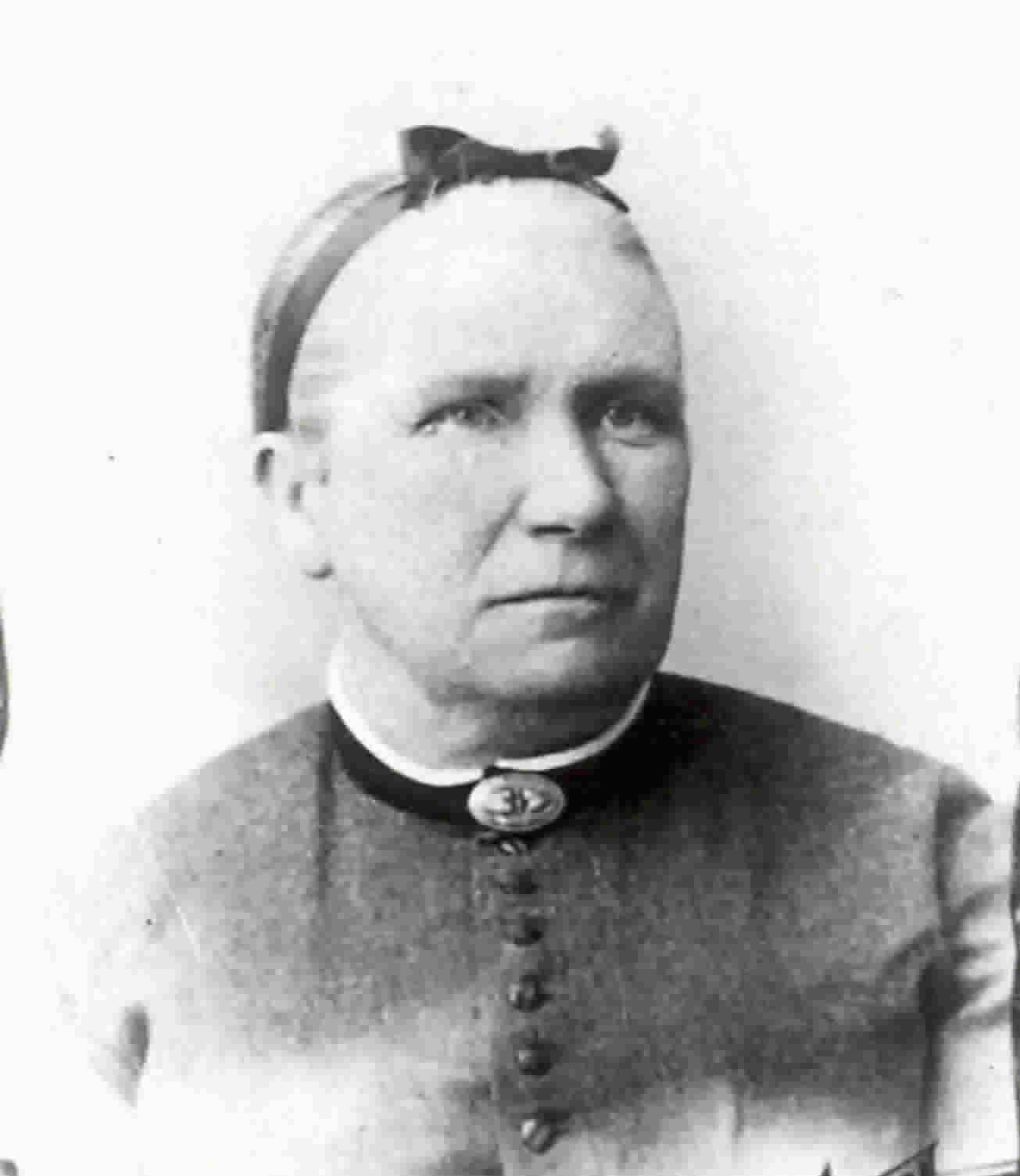
I wanted it to have more of an old-fashioned feel so I went to the internet to find some clip art to enhance the pages. First I found a swirl at clker.com then a splotch at openclipart.com. I created another layer on the master page for these images. It took awhile playing around with placement and transparency to get the look I wanted. For the cover I placed the only photo I have of Mary Taylor and adjusted the swirls and the splotches to make the cover work.

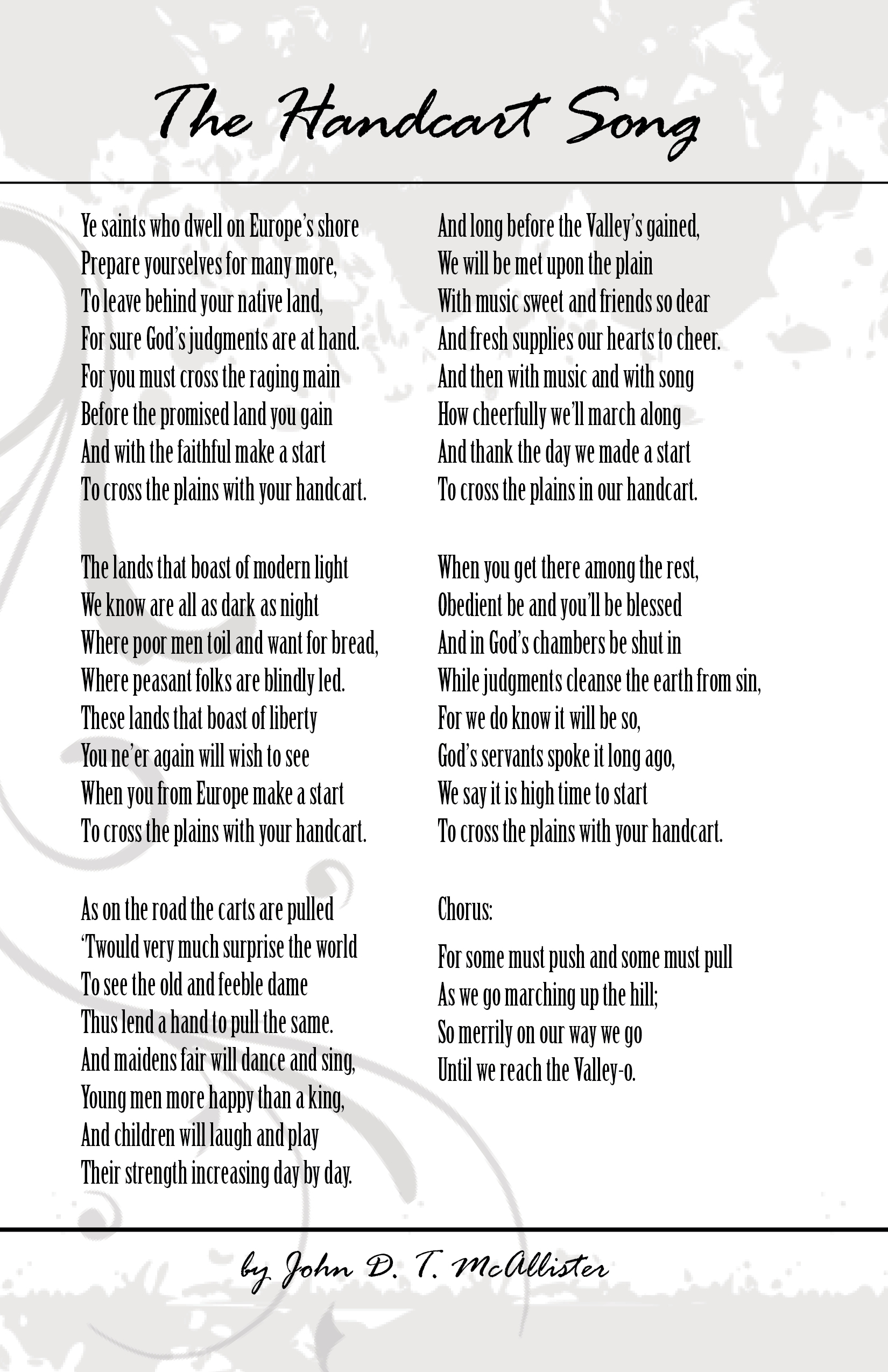
The Handcart Song - Martin's Cove Journal

Another thing I wanted was a spot to put some information about what was happening in the rest of the world. So I adjusted the right hand page and added a text box on the bottom of the right page with room for a couple of events with dates. After I let the project sit for a day or two I decided to add the lyrics to “The Handcart Song” on the back. This was a favorite song of my great-great grandmother. Besides singing it as she traveled to Utah in 1856, she sang it her whole life.

pedigree chart - Martin's Cove Journal

The last thing I wanted in the journal was a pedigree chart. I made one using the pen tool to make straight lines. There is probably an easier way but I made a vertical line and a horizontal line and made copies of them to build the chart. After I got everything arranged I zoomed in to make sure the intersections of the lines was precise. Then I made text boxes for all the names. Note that I put these on another layer so that I wouldn’t accidentally mess up the pedigree chart while playing with the names. I also used Rage Italic to put relationship labels on the pedigree chart. I used the 30% black tint to make sure these didn’t compete with the names.

I showed my mom a proof copy yesterday and she is very excited. She said it would be worth going to Martin’s Cove just to get the journal. She is 89 years old so going to Martin’s Cove isn’t easy. My parents have decided to stay in a hotel. They don’t feel up to camping.

I haven’t figured out how to put the template here to download so if you would like an InDesign template for this project send an email to raelyn@tellingfamilytales.com. Did you find this post helpful? I’ve never tried to explain how I put together a book before and I’m not sure if what I wrote is the kind of information that is meaningful, so I’d love some feedback.

Martin’s Cove Journal – Finishing up

I’m really excited about how this came together. I was hoping it wouldn’t take too much time and I really tried to keep it simple. But at the same time I wanted it to have some personality, to help draw people into the experience at Martin’s Cove. When I did this cover with the only photo I’ve ever seen of Mary Taylor, I noticed how much she reminds me of my Grandmother. I don’t know why I haven’t seen the resemblance before.

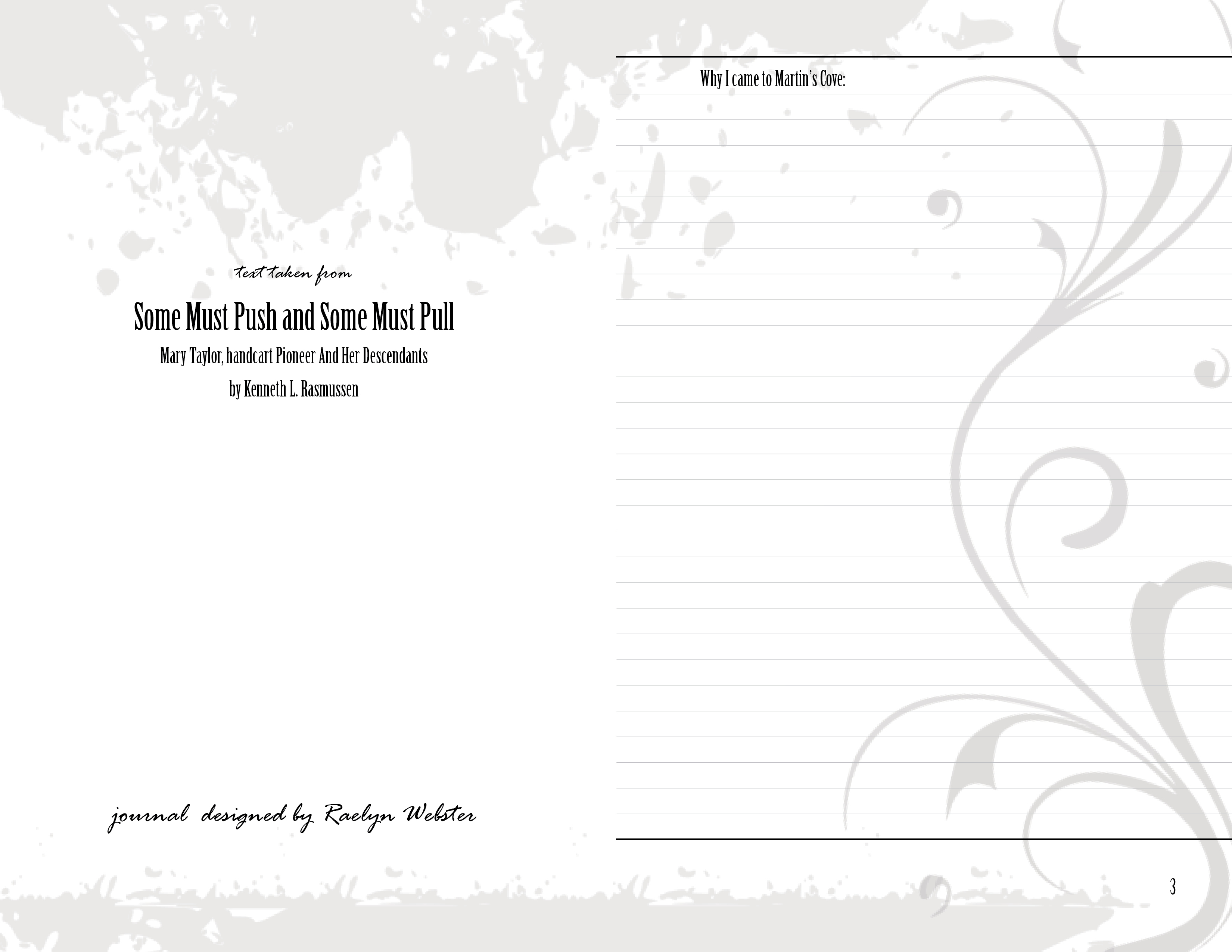
credit page & find your why page - Martin's Cove Journal

This first spread is a place to give credit where I got my information and to give space for family members to journal about why they came to Martin’s Cove and what they hope to learn from the experience. My hope here is to help each person take the this opportunity to do their own generation project.

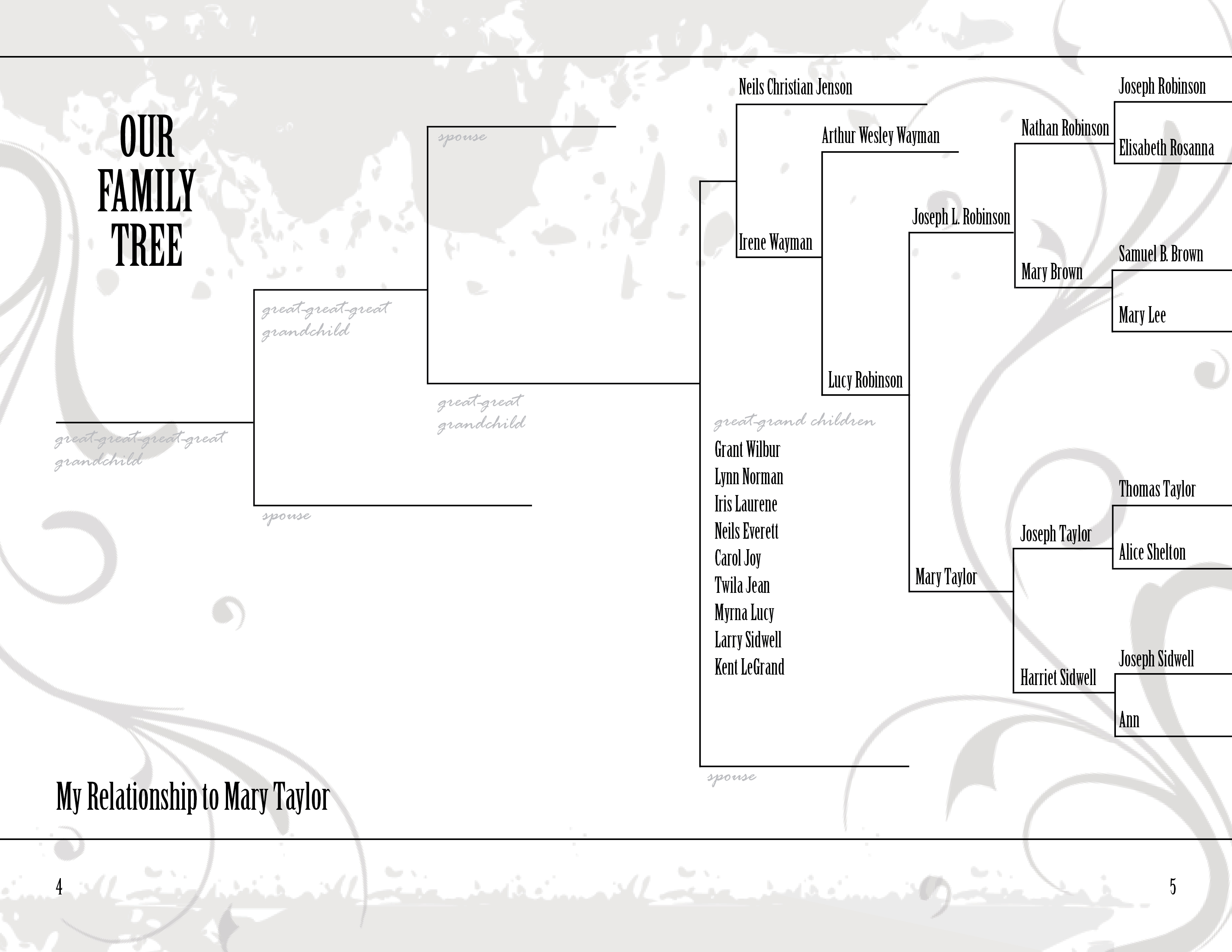
Our Family Tree - Martin's Cove Journal

This next spread is for the second step of a generations project – populate your tree. I filled in the basics of the information that is common for everyone who is coming to the reunion. They will each have to fill in the left side of the tree depending on who they are. This was a little tricky to figure out how to lay it out. I hope that it is clear on how each family member connects back to Mary Taylor.

content pages - Martin's Cove Journal

The rest of the pages up to the last page look like the page above. On the left had side there is a simple timeline of events along with excerpt from “Some Must Push and Some Must Pull; Mary Taylor, handcart Pioneer And Her Descendants”  by a distant cousin Kenneth L. Rasmussen. The right hand page of each spread is for journaling. At the bottom of the journaling pages is a date from history. The purpose of these pages are to help each person to “mix it with history” and “walk in their shoes” as suggested by The Generations Project.

The Handcart Song - Martin's Cove Journal

The last page of the book is the words to a favorite song of my great-great-grandmother, “The Handcart Song”. She sang this song not just while she was crossing the plans but all her life. I want to learn all the verses and help my family to learn it too.

I’ll do another post later in the week on the “how to” of putting this journal together and if I figure out how, I’ll have an InDesign template that you can download and adapt to your needs.

Martin’s Cove Journal – getting started

One of the things I’m working to improve in my projects is my workflow. So I’m experimenting on new ways to approach the process. To start with I am going to try to follow Nancy Barnes’ method of

  1. imagine
  2. plan
  3. create
  4. edit
  5. design
  6. publish

and see how that works for me. In the past I have jumped to the design stage too fast and it ends up taking more time than necessary. Part of the journey of this blog is for me to learn and improve as I share what I find with others. So I took some time this week to imagine what I want the end product.

  • compact
  • rustic
  • durable
  • timeline of events
  • excerpts from journals & stories
  • space to journal, draw, add photos
  • historical info
  • pedigree chart

I’ve decided to make it simple to self publish with my printer and a copier, I’ll make it 8.5″ x 5.5″ (half sheet of letter size paper). Don’t know how I’m going to bind it yet. If I can’t figure anything else out I’ll use wire binding because I can do that myself. I think I’ll have a bit of rustic/grunge on the pages that will help add an old feel to the journal.

I started working on the timeline of events and journal excerpts from sources on the internet and a book recently published by a distant cousin, Kenneth L. Rasmussen “Some Must Push and Some Must Pull: Mary Taylor, handcart pioneer And Her Descendants.” I found a great timeline for the Willie company but I found out that much of the documentation for the Martin handcart company was lost. There is some conflicting information that I’m going to have to decide how to resolve. Plus I need to decide how much is enough. I don’t want a big long comprehensive journal, just enough to give my family some background and a sense of what happened to Mary.

The general plan of the layout of the journal is to have the timeline in a side bar down the left side, with excerpts from journals on the rest of the left hand page. Then I’ll keep the right hand page on each spread open for thoughts, sketches etc.

What kind of approach do you use when you start a new project and as you progress through? I’d love to hear and learn from your experiences.